Showing posts with label 3 stars. Show all posts

The Boy Who Loved Anne Frank

- by Ellen Feldman

There are very few women my age who have NOT read The Diary of Anne Frank; it is one of the few secular books that have had an impact on my life. The author, Ellen Feldman, draws from that harrowing true life story and offers us a glimpse of what may have happened if Peter - Anne's young love - would have survived the Nazi regime and continued to live his life, after immigrating to America.

The young Jewish boy, Peter van Pels (or van Daan as Anne renames him in her diary) was hidden in the "secret annex" along with the Frank family; he was never reported as dead or alive after the War. What IF Peter van Pels, the boy who loved Anne Frank, survived the Holocaust? Would he have remained trapped in a psychological annex for the rest of his life? That is the story Feldman weaves in this scenario of 'what ifs'. It is written from Peter's perspective as he struggles mentally with what he has been through, what he has survived, and things he will never be able to forget.

While it was not the narrative I was expecting (to be honest, I initially thought it was book about Peter and Anne while they were living in the annex), it was an interesting read and one of those stories that make you think.

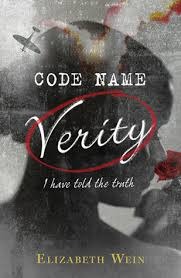
Code Name Verity

- by 
(epub)

This was a very unique book. At times, it was difficult to build a 'relationship' with the main character, due to the jumble of names and information presented in a disjointed style. It felt a bit too much like deciphering 'texting talk.' (Perhaps, because it is classified as a young-adult book? I'm not sure.) I also found it rather confusing when the main character wasn't overly clear regarding her identity, coupled with the often-times baffling stream-of-consciousness writing style and switch in narrators. All the pilot/flying talk was a bit dull and I'll be honest... I found myself skimming through a lot of it. However, the core premise of the plot was well put together and kept you reading. 

The story, of course, was heartbreaking but interestingly written, with a lot of heart. When it all comes down to it and you peel everything else away, this is basically a story about 2 bosom friends who would - and DO - anything for the other.

The Guernsey Literary and Potato Peel Pie Society

-by Mary Ann Shaffer, Annie Barrows

Brimming with witticisms and a cast of lovable characters, this epistolary novel is an enjoyable read. One cannot fail to be charmed by the small island cast milling about Guernsey (a small island in the English Channel), who manage to endure the Nazi occupation with their own unique brand of pluck and pertinacity.

Juliet Ashton - a successful English journalist well known for writing a humorous column during the war years - sets out to pen a book now that the war is over. Suffering writers block for a subject, she fortuitously stumbles upon the Guernsey Literary and Potato Peel Pie Society - a band of islanders who form an intimate literary club, originally established on the fly as an excuse to conceal contraband food from the occupying soldiers.

Once the society’s members discover Juliet has focused on their club for her novel, it is not long before they start coming out of the woodwork. Sending Juliet letter after letter, they relate their experiences of how their little society helped them cope with the occupation, rallying them together, and often times the amusing predicaments they often found themselves in. But it’s not all silly antics. The grim reality of war casts a shadow on their letters, and gives the reader a window into the lives of those affected by the Nazi occupation.

While the entire premise is enjoyable, and the wit admirable, something in the story fell a little flat. Most of the characters seemed more akin to caricatures, writing with seemingly the same intonation as each other. Still, if you enjoy a good ‘story book’ ending and fun characters, it’s a rollicking - if not fluffy - read.

Kristin Lavransdatter

- by Sigrid Undset, Tiina Nunnally (Translator)


As much as I was interested in this detailed life-epic, I must admit the story was not a good 'fit' for me. Not that it lacked a lot of things that make for great story telling, but perhaps it failed to captivate me due to the fact that I could not relate to the main character. I can see why some may be captivated by Kristin's story and inner battles. I can see this novel appealing to those with children (or those with a "maternal instinct"), as they will better be able to understand most of Kristin's plight as a parent throughout the majority of the story.

Perhaps it was also the translation into English that made the book lackluster to me. I felt the text lacked a lot of feeling, and was written a little too "matter of factly" for my taste. No doubt the original manuscript, in Norwegian language, was much more rich and engrossing.

As I cannot give this trilogy a stellar review for the aforementioned reasons, I have given it 3 stars for all the intriguing information I learned about life in 14th-century Norway.

The House at Riverton

-by Kate Morton

a pleasant middling read, but nothing more

In the winter years of her life, 98-year-old Grace looks back on her past. Bound by society's early 20th century conventions as a misbegotten child, 14-year-old Grace was sent to be a servant in the 'big house' at Riverton. Fast-forward to the year 1999 - the production of a film is in progress regarding a tragic death that occurred at the house. The elderly Grace is asked to recollect any snippets of memories that would add to the film's authenticity and thus she begins to recount her memoirs of the event surrounding that time period. She also records more forthright details for her grandson; a final task she sets before herself, prior to her death.

Footslogging at a snail-pace at the outset, any impatience will be appeased when the slow-developing plot gradually quickens, culminating in a somewhat predictable and "tied up neatly with a bow" conclusion. Worthy of note is Morton's obvious research that went into the book and her uncanny ability to evoke the past. The candid glimpse into the sub-hierarchy goings on "below stairs" in the realm of servants, butlers and maids was nothing fresh, but certainly intriguing.

The characters in The House at Riverton failed to resonate, save the elderly narrator, Grace, who was particularly well developed. Grace, alone, had a richness, a realness, that you truly were drawn to - not merely as a geriatric caricature but as a living breathing person that you could almost touch. The ultimate "revelation" about Grace's origins wasn't a surprise. The drawn-out painstaking way this truth was realized by the lead character was irritating and detracted from the rest of the story.

A book like this would suit someone looking for a light, but entertaining, weekend read. Think Remains of the Day and Upstairs, Downstairs, sans remarkableness. Enjoyable, interesting, yet insubstantial - nothing that which would warrant a repeat perusal.

Quattrocento

Quattrocento
-by James MacKean
320 pages (2003)

a noteworthy first attempt


Expert violinmaker, McKean, ventures into new territory with his ambitious debut novel, Quattrocento - a story of fine art and love, cleverly disguised as time-travel conceit.At the heart of the story is Matt O'Brian, an art restorer at the Metropolitan Museum of Art, who struggles with the realization that he has revealed a never before discovered quattrocento* masterpiece by Leonardo da Vinci; a painting of a beautiful young woman, who O'Brian names "Anna". The painting and the subject become the focus of his obsession, and O'Brian fears its discovery, as he does not wish to be parted from it. In the meantime, the Metropolitan Museum has finished the restoration of Federico's Studiolo, an ancient study, a placeO'Brian is often drawn to for quiet reflection.Unwilling to psychologically part with the painting that he has worked tirelessly on, O'Brian ultimately loses himself to the mysterious allure of the studiolo, and finds himself unwittingly whisked across five centuries to the quattrocento to be with the painting's beautiful subject, Anna. There he discovers she is a Contessa and also an artist, married to an elderly man. It is not long before O'Brian also encounters her dangerous suitor, a covetous knight named Leandro, who plunges the art curator into a treacherous love triangle, vying for the Contessa's affections. After falling in love and sharing their affection with a discreet kiss, Matt is parted from Anna, and is returned to present day.

O'Brian, desperate to return to Anna summons the aid of some ambiguous quantum mechanics, and is somehow jettisoned back to the quattrocento to pursue her again freely. Her elderly husband has since passed away, and most importantly the jealous suitor Leandro is (somewhat too conveniently) gone.

McKean's imaginative Quattrocento is a sprawling tale that is more fantasy than it is drama. The author's artistic background serves him well throughout the novel, as details regarding the beautiful world of art are truly breathtaking. Several passages meld "castle in the sky" whimsy and reality as O'Brian loses himself inside various art works. And yet, throughout the novel, it seems as though McKean has bitten off a bit more than he can chew with regards to physics and the idea of time travel, as the descriptions become often tedious and lack a lot of logic. But his efforts do deserve at least a nod of appreciation from art and book lovers alike.

*The cultural and artistic events of 15th century Italy are collectively referred  to as the Quattrocento (from the Italian for 400, or from "mille quattrocento," 1400).  Quattrocento encompasses the artistic styles of the late Middle Ages and the early Renaissance. -Wikipedia

Buy Quattrocento at Amazon.com


02/02/2007


Amanda Bright @ Home

Amanda Bright @ Home
-by Danielle Crittenden
336 pages  (2003) 

Bright indeed!

Well-written, brimming with quick wit and authentic characterization, Amanda Bright @ Home was an enjoyable light read. 

Inspite of the fact that I am not a mother myself, I could sympathize with many of Bright’s plights including her innate craving to feel needed and significant. (I think, deep down we all do.) As the main character - all too human and ‘real’ – Amanda is instantly likeable and true-to-life.

What hit close to home was Amanda’s frustration at being surrounded by superficial women of the community who seemed to sharpen their claws at the sight of simple, intelligent, Bohemian Amanda - an unexpected threat to their ‘perfect’ not-so-perfect pampered realm. In a community reeling with sprawling mansions, status symbols, face-lifts, and shallow fashion magazine ‘perfect’ ladies - down-to-earth Amanda struggles to fit in, and at the same time desperately attempts to find her place in the world - endeavoring to balance motherhood with the secular workforce she yearns to be a part of.

Where I harbor no major criticism of this touching bit of fiction, I must admit that at times I felt that the main character was a bit too envious of her peers’ situation, listing off their assets in stark contrast, overly emphasizing what she didn’t have – almost bordering on whining at times. However, this is not atypical if one is in an unhappy situation and is surrounded by negative feelings and self-depreciating thoughts. In this case, I suppose the old cliché applies: “the grass is always greener on the other side.” 

Since I am not a mother myself, I feel somewhat ill-qualified to give this book the review it deserves. However I can definitely say that my admiration for a mother’s many sacrifices has only deepened after reading this very enjoyable book. My kudos go to Crittenden for her compelling narrative.

- reviewed for Time Warner books

The Dance of Geometry

The Dance of Geometry
-by Brian Howell
220 pages (2002)

shadows and light

Brian Howell's successful first book, The Dance of Geometry, is an indulgence for all of us art aficionados – those of us who have found ourselves irrevocably lost in a “story” captured on canvas, and the clandestine lives and experiences of the artists themselves.

Howell artfully interweaves three unique perspectives, offering the reader a rare glimpse into the mind and life of 17th century artistic mastermind, Dutch painter Johannes Vermeer – the artist as a child, pliable and vulnerable to influence; Vermeer as an artist in his prime; and a modern-day art copyist in quest of more than a mere replica of the Dutch artist's work. Excerpts of Vermeer’s childhood and experiences which would influence his work later on in his life are melded together, further on in the plane of time, with an abstract narrative of his journey to becoming an ingenious and respected artist in later years. 

The story casts shadows and light on the beautiful harmony, colour, and depth found in Vermeer’s art, possibly enhanced by incorporating the use of a camera obscura, and utilization of de Vries’ perspective and visual field

The final chronicle by the modern day art copyist delving into Vermeer’s work and milieu as an artist, is the final ‘signature’ to Howell’s literary work of art.

By and large, The Dance of Geometry is an engrossing piece of abstract work that is worth exploring in detail not unlike Vermeer’s own.

07/19/2004

Quite A Year For Plums

Ceridwen of Kilton
-by Octavia Randolph
284 pages (2001)

Octavia Randolph’s historical adventure “Ceridwen of Kilton”  is set in unstable 9th Century Saxon England during the Danish Viking incursion. The narrative revolves around Ceridwen - a brave and beautiful young mother and wife, dealing with life during such a volatile period of time.

Ceridwen of Kilton is a richly-woven tapestry of characters with great depth, beauty and strength. The tale holds an appeal to the human plight of survival and love. We agonize with the characters...the long (yet resolved) understanding between Sirroc the Dane and Ceridwen. The deep kinship yet brotherly rivalry between Godwin and Gyric...to mention but a few. The characters are hardly static, as they grow throughout the story. The reader will especially enjoy observing the persona of Gyric (Ceridwen's  husband), who advances from a inward lost soul, lacking self-confidence, to a strong stabilizing force of the Kilton foik, and a behind-the-scenes hero and leader.

The narrative itself is masterfully written and its complex historical details are a testament to a novel well-researched with much care. There are some parts in the book - explicitly sensual in nature - which the story could have done without. It is therefore the reason why one couldn't recommend this book to "everyone". Yet, the plot and characters alone, stand testimony to a most intriguing and adventuresome tale.

05/22/2002

Sense and Sensibility

Sense and Sensibility
-by Jane Austen
356 pages (1811)


The truth is...and heaven help me...I cannot esteem it as well as I should like.

It can't be explained in entirety, but I find the novel noticeably lack-luster after reading Austen's other outstanding novels. A plethora of secondary characters and sub-plots choke out a lot of the brilliance of its main characters. This is a rather surprising realization for me, being an avid Austen fan - but it is spoken with all honesty. Nevertheless, even though it is not Austen's best written work, it is still a very amiable novel and a nice light read for any classics buff.

I'm sure I'll never forgive myself for the following suggestion (as it's truly a once-in-a-lifetime scenario): Do yourself a favor and rent Ang Lee's adaptation of this beautiful story, and skip the book. Lee skims off the unnecessary details and redundant characters and exposes the creme de la creme of Austen's "sensibilities".

Beyond This Place

Beyond This Place
-by A.J. Cronin
320 pages (1953)

an enthralling  "weekend novel"

An older friend of mine leant me this book...she has owned it since its publication date in the 1950s, and it was one of her favorites. Indeed it was quite a captivating novel. A tad bit 'weak' at the outset, but as the story moved along, the plot thickened - and it evolved into a real page-turner.

A young man learns the story behind his father whom he was told had died long ago. Through his own investigations, the son finds that his father was wrongly convicted of a brutal murder 16 years earlier due to a miscarriage of justice, and was sentenced to life in prison.  The son learns the father is still in prison and has already served 15 years of his life sentence. After learning the facts, the son strives to clear his father's name. He eventually exposes a cover up by the police and the political system, which sought to frame his father for the horrible crime. I won't spoil the ending for you, but suffice it to say it was relatively a satisfying one.

I must admit there were some occurrences in the novel which seemed a bit dubious, however, nothing overtly outlandish took place that drew attention away from the story line. I would've liked a bit more characterization of some of the secondary characters - you don't learn too much about the way their minds work. You're also left wondering about the fate of some of the characters. For example, the boy's mother - who received almost ALL the focus at the outset, seemed to 'disappear' near the ending of the book.

However, I must say, overall it was well written in my opinion. This book was not heavy reading - it's one you're able to finish in a couple days...a good "weekend novel."

03/18/2001

The Lighthouse Keeper

The Lighthouse Keeper
-by James Michael Pratt
336 pages (2000)

Get out your kleenex box! 

This one is a tear-jerker. A story about an old lighthouse keeper who wishes to pass along his legacy to an only daughter, shortly before his death. The story revolves around his earlier life as a simple Irish immigrant, sent off to Europe in WWII, the tragedies of his young life, and how he came to be the lighthouse keeper.

A story of love lost, which is ultimately regained. The ending is a bit farfetched, in my opinion, yet the story itself keeps you reading to the end. A touching novel with a social comment...and a new twist on the meaning of a "light keeper."

03/05/2001

Villette


-by Charlotte Brontë

622 pages (1853)

[Dec. 29, 2000] At a friend's urging, I am at the outset Charlotte Brontë's novel Villette. I will pen a brief review when I have completed it. 

[Jan. 20, 2001] Due to lack of leisure time, I am only now half way through Villette. I found it a bit difficult to get into during the first few chapters however I am enjoying it at present. The novel is set in the mid-19th century, and revolves around a shy and unworldly English governess cast adrift in a French city far away from her home. While dealing with the flamboyant and eccentric personalities surrounding her, she seeks to discover herself. 

[Jan. 28, 2001] I stayed up late finishing it last night, and read it on the way to/from work. It was hardly a 'gripping' novel yet I just couldn't seem to put it down. I thoroughly enjoyed the characters, which Brontë easily brought to life, and I admired her poetic style of writing. It just seemed to be lacking in so many regards. I'm a bit disappointed with the ending, which is vague and leaves the reader 'dangling.'