Showing posts with label classic. Show all posts

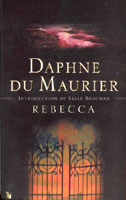
Rebecca

Rebecca
-by Daphne du Maurier

416 pages (2001) Harper Paperbacks
originally published in 1938
ISBN 978-0452284142

MY RATING: 4.5/5

modern-day Jane Eyre

The house at the centre of Daphne du Maurier's novel Rebecca, opens with the famous lines: “Last night I dreamt I went to Manderley again. It seemed to me I stood by the iron gate leading to the drive and for a while I could not enter, for the way was barred to me”. A fitting introduction to the spellbinding tale of intrigue, mystery and love.

At the outset of the novel Rebecca reflects on a dream she has had about Manderley estate, and as the story unfolds, she becomes the narrator of her story.

Simple, naive and young, Rebecca staying at a hotel with her employer, Mrs. Danvers, happens to meet the brooding handsome Maxim de Winter, a wealthy widower who is rumoured to have lost his first wife under mysterious circumstances. She ultimately becomes his second wife, and they moved to his estate at Manderley. As she settles into high society, she realizes how diffucult the adjustment is for her. Her relationship with Maxim becomes the object of rumours.

Mrs. Danvers, the mysterious and cruel housekeper.

No Name

- by Wilkie Collins

A virtually unknown masterpiece, and a new favourite from a picky reader

After the untimely death of their parents, the Vanstone sisters, Norah and Magdalen, face the stark reality of social stigma in Victorian England. Orphaned and penniless, they learn the devastating truth - they are illegitimate (children with "no name", hence the title of the book). And due to an anomaly in their father's will, the entirety of his wealth and estate is legally entailed away to their heartless uncle, who has no regard for their futures.

Vastly different in temperament, the elder sister, Norah calmly accepts her change in circumstance, resigned to accept work as a governess, while independent and scheming Magdalen refuses to accept the fate that their uncle has bestowed upon them and sets out on her own, vowing revenge.

To carry out her complex strategy of retribution, Magdalen enlists the assistance of the wily Captain Wragge, a distant relation and a self-confessed defrauder, who proves to be a comic relief with a tender humane heart at the core. Readers will be delighted to discover Wragge is just as memorable as many of Dickens' likable miscreants (not unlike Little Dorrit's Mr. Pancks).

Wragge and Magdalen face an uphill battle of wits, trying to outsmart the ruthlessly sharp Mrs. Lecount, the controlling and manipulative housekeeper of the will's beneficiary, Noel Vanstone. While Norah dutifully carries on with her life without incident, the intrepid Magdalen continues on with her quest for justice - at any expense - culminating in a surprise ending.

Perfectly plotted, though admittedly a tad bit slow at the outset, No Name is a treat for any classics lover and is well worth the time invested in its 700+ pages. Highly recommended!

The Convenient Marriage

- by Georgette Heyer

 
 A fun "Georgian Romp" well worth reading!

Fun, well-written, and refreshingly comedic, I thoroughly enjoyed The Convenient Marriage. It was everything I hoped it would be and, while lacking in the deep-thinking department, it more than made up for it in wit and humor. 

At the outset of the story we are introduced to the eldest Winwood daughter, Elizabeth - a beauty of of noble birth, yet virtually penniless. At the prodding of her well-intentioned mother, Elizabeth is about to turn her back on her true love, Captain Heron, and marry a complete stranger, the Earl of Rule, solely for his vast wealth. However...

Enter: Horatia ("Horry") Winwood, Elizabeth's younger rebellious sister. Though rather young and uncouth, as well as stuttering and stubborn, Horry decides to save her sister from a loveless match! After much scheming, and to her elder sister's relief, Horry eventually takes her her position as the Countess of Rule. The Earl accepts the swap, but not without 'enduring' the adventure and hair-brained antics that ensue, involving the Countess herself, Pelham (the Winwood's congenial gambling brother) and his drinking buddy.

The Convenient Marriage literally brims with witty dialogue and interesting back-and-forths, with well-drawn characters and a quickly moving, easy-to-follow plot. The ending, albeit predictable, will satisfy any romantic at heart.

This was my first Heyer experience - I was so charmed by it that I *know* it won't be my last. :)

Little Dorrit

-by Charles Dickens

1820's rags-to-riches tale, Dickens style

Where most books develop one puzzle piece at a time, Dickens' novels are comprised of large pieces that are gradually deconstructed into tiny individual parts, scattered with wild abandon, and then slowly reconstructed methodically until the final puzzle is complete. Little Dorrit is no exception to this Dickensian template.

A sardonic social lampoon and a searing satire at bureaucracy’s expense, Little Dorrit serves as Dickens’ analysis of society at the time and yet still retains a quiet dignity and undercurrent of a more psychological application.

This Dickensian classic explores imprisonment of both the literal and symbolic genre. Broken into two separate books – “Poverty” and “Riches” – the novel explores life from two different sides of London’s dreaded Marshalsea debtor prison’s walls.

Upon Arthur Clennam’s return to England after several years abroad in China, he meets and develops a benevolent interest in Amy Dorrit, the quiet diminutive seamstress of his embittered mother. Born within the Marshalsea prison walls, “Little Dorrit” as she is affectionately dubbed, patiently cares for her aging father, William Dorrit - a gentleman of past grandeur, long incarcerated for a debt he cannot repay. As Clennam becomes further acquainted with the Dorrits, he realizes his own mother holds a long-held secret regarding the Clennam's connection with the Dorrit family. Arthur also recalls mysterious fragmentary utterances by his dying father, desperately begging him to ‘make things right’ with the Dorrit family, for reasons unspoken. In light of this, Clennam takes it upon himself to investigate further into the imprisoned family’s history. It’s not long before he discovers that the dark secrets of the past stretch far beyond the prison walls to affect the lives of many, including his own.

As with any Dickens’ novel, it wouldn’t seem complete without its typical array of capricious stereotypical characters, from the likes of the excitable snorting rent-collector Mr. Pancks; the cranky crooked manservant Mr. Flintwinch; to the taciturn Flora Finching; the bureaucratic Barnacles in the unscrupulous Circumlocution Office; and the blatantly villainous but charismatic Monsieur Rigaud (with no less than three French aliases), whose hooked nose ventures over his mustache every time he utters a sinister laugh – a frequent occurrence.

Still, Little Dorrit defies categorization. Simultaneously a tragedy, comedy, social commentary, satire and mystery, it is a puzzle that, when solved, resolves itself to be an allegory of love itself, and the emphasis of personal responsibility. The novel is also a testimony to that rarest strength of character which ultimately remains untainted by status and situation in life, whether it be riches or poverty. It is observable to anyone familiar with Dickens' biography that the book draws intimately on the author's own troubled childhood, when his own father was imprisoned for three months in the Marshalsea debtor’s prison.

Granted, without rapt concentration, readers will easily be lost in the exuberant sprawl of its 800+ pages, but will find that it is well worth the effort.

The Blue Castle

The Blue Castle
-by Lucy Maud Montgomery


My Rating: 5 / 5

Best remembered for her well-loved red-headed heroine, Anne of Green Gables, Lucy Maud Montgomery's understated more 'grown up' novel, The Blue Castle, deserves equal, if not a higher echelon of praise. An invigorating exercise in general satire, The Blue Castle's characterization borders on Dickens-like caricature as Montgomery introduces an array of amusing, egotistical and decidedly silly relatives of the heroine, Valancy Stirling.

Social and familial pressures have combined to deny the sensitive 29-year-old the simple joys of youth. An overbearing pious mother and dour hypocritical relatives, who attempt to elevate themselves to local aristocracy, deliberately snuff out any spark of happiness that could make its way into Valancy's life.

She secretly finds solace in her daydreams of her 'Blue Castle' - a fantasy world she retreats to, where she is adored and happy; and the nature books penned by John Foster, a popular (but mysteriously unknown) author who writes about the poetic beauty of Canada's wilderness. Little does she know her life is about to change, on the receipt of a letter from her doctor, and that her Blue Castle will soon be within reach.

As the heroine herself undergoes a complete metamorphosis due to major life-changing events, so the plot takes the reader around one exciting bend after another. It is a pure delight to read and is sure to become a fast favorite of any reader that delves beyond the tasteless cover and insipid synopsis on the back of the book. The Blue Castle is truly one of L.M. Montgomery's greatest works that you will want to share with others!

Jane Eyre

Jane Eyre
-by Charlotte Brontë


ISBN-10: 1593081170 / ISBN-13: 978-1593081171
594 Pages (2005) Barnes & Noble Classics


My Rating: 5 / 5

a timeless classic

Charlotte Brontë’s Jane Eyre, a well-loved contribution to British classic literature, not only conjures images of mysterious gothic edifices and windswept moors, but more importantly, traverses the immeasurable depths of human emotion and its relation to the rigid social structure of the 19th Century. An exceptional amalgamation of ardent sentiment, extraordinary yet accessible characters, mystifying somber ambiance, and intelligent prose, Jane Eyre, is every bit as enrapturing as it was upon its first publication in 1847 by Smith, Elder & Company of London.

Orphaned as an infant, spirited 10-year-old Jane Eyre is sent to live with her rich relatives at Gateshead. Her aunt, Mrs. Reed, who had formerly promised her husband on his deathbed to love and treat Jane as one of her own, outwardly treats her adoptive niece with contempt. Reed’s own children, torment and treat Jane with hostility, constantly reminding her that she is destitute and reliant, and at their family’s mercy. Ultimately finding the antagonistic treatment insupportable, Jane resolves to stand up for herself, ending in a physical altercation with her vindictive cousin, John. She held accountable for instigating the clash and is severely castigated by her Aunt Reed. At the suggestion of a kind-hearted physician, Mr. Lloyd, Jane is sent away to Lowood School, a charity institution for orphan girls, run by Mr. Brocklehurst, in the hopes that she can escape her unhappiness at Gateshead and attain a sensible education. Jane’s Aunt Reed seems happy to be rid of her troublesome “possessed” niece, and instigates the cruel and unyielding Brocklehurst to keep her “in line” – singling her out from her peers, for discipline and ridicule.

Despite continually being made the target of the mean-hearted minister’s ire, Jane makes two special friends – a teacher, Miss Temple, and fellow student Helen Burns, who is eventually overcome by the poor living conditions and a typhoid epidemic that sweeps through the school. Due to the growing public outcry of the terrible conditions at Lowood, the school gradually is improved. Jane excels in her studies and flourishes in the improved surroundings, attaining a respectable education and becoming a teacher at the school. At age 18 she decides to advertise. As a result of her self-sufficient resourcefulness, Jane obtains a post as a governess and tutor at Thornfield, a sprawling country estate. She is warmly welcomed by the estate’s the friendly housekeeper, Mrs. Fairfax. As the months pass, the estate owner’s ward, Adèle Varens — a 10-year-old French girl of dubious parentage — begins to excel under Jane’s watchful eye and tutelage.

Walking to Thornfield one misty evening, Jane quite literally stumbles upon, Mr. Edward Rochester returning home from a long absence — the owner of Thornfield and her employer — a rugged, brooding man in his late-thirties. Although often aloof and “changeable”, Rochester is gradually bewitched by this young “other worldly” governess, and the two steadily form an unlikely attachment. Thus begins the greatest romance in literature. As the astounding drama unfolds, Jane also discovers that Thornfield harbors a secret…one that will change her life forever.

Brontë’s acute consciousness and understanding of the complexity of human emotions lends an unrivaled splendor and depth to Jane Eyre. She artfully molds what is a fundamentally mournful account into a tale of hope and happiness, imbuing it with vibrant, albeit succinct, metaphors of man’s immense capacity for kindness, decency and love.

Buy Jane Eyre at Amazon.com


04/20/2007


- reviewed for Sterling Publishing Co., NY

The Annotated Pride and Prejudice

The Annotated Pride and Prejudice
-by Jane Austen (annotated & edited by David M. Shapard)

740 pages (2004)

MY RATING: 4.5/5

a more focused glimpse into Austen’s world


The Annotated Pride and Prejudice, indefatigably researched by David Shapard, contains intriguing particulars ranging from regency-period events, economy, society and customs of the time, to facts about Jane Austen’s family life and personal history, as they apply – verse by verse, paragraph by paragraph – to her most beloved of novels, Pride and Prejudice.

Not only a lovely bound volume of Austen’s masterpiece, Shapard’s meticulous work is also a uniquely comprehensive reference tool, or glossary, for the analytical prowess of the Regency-period zealot. Even more enjoyable are the literary commentaries, and “enlightenments” of certain ambiguous passages and behaviour of Austen’s enduring characters.

Within its tirelessly investigated annotations, in simple easy-to-read terms, Shapard effectively explores the development of Austen’s novel, drawing from the historical context “behind the scenes”, that the Regency-period author drew from -- the society from which Austen lived, and the world that shaped her creative mind to produce such a well-loved story.

The striking detail and explanations, encompassed by ample definitions, maps, illustrations and how it all fits into the novel’s context, will add a full, rich dimension to one’s reading.

The Annotated Pride and Prejudice is a book every avid “Austenite” and Pride and Prejudice aficionado would not want to do without – it is a more focused glimpse into Austen’s world, which will offer immense delight to the book’s enthusiasts.

Buy The Annotated Pride and Prejudice at Amazon.com


04/02/2007
- reviewed for Curled Up With A Good Book

The Woman In White

The Woman In White
-by Wilkie Collins
720 pages (1860)

Wilkie Collins’ most captivating oeuvre


A master craftsman of timeless classics that still garner accolades today, Wilkie Collins’ brilliance was often eclipsed by the illustriousness of his well-known contemporary, Charles Dickens. Fortunately Collins’ literary tour de force can still be enjoyed and appreciated today.The Woman In White is unquestionably one of his best works — a superbly written, gripping gothic mystery that will enthrall Victorian lit and ‘whodunit’ lovers alike. Complex, yet incredibly involving, the novel is full of atmosphere and rich description. Collins is also verified as a superb stylist with his evocative array of unforgettable characters.Throughout the novel, Collins’ allows several of his characters to espouse the role of narrator, which lends an exciting edge, where readers are unsure which characters, can or cannot, be trusted.

When a mysterious woman clad in white, accosts Walter Hartright, a young art master on his way to a new commission to teach two half-sisters, the catalyst emerges upon which the entire narrative turns. The idealist Hartright is soon introduced to and fast becomes close friends with his two new pupils at Limmeridge House -- Laura Fairlie, the young naïve maiden and heiress, who abides by her father’s deathbed-wish to marry Sir Percival Glyde; and Marian, head-strong, independent, and fiercely loyal to her younger half-sister Laura. Despite Marian’s belief that her sister’s wedding should continue according to their father’s wishes, Marian soon becomes suspicious of Sir Percival’s intentions in marrying Laura, who she believes is only pursuing Laura for her fortune. Enter the cunning and rapacious Count Fosco from Italy, who is also strangely suave and genial a villain as one is likely to meet in literature. Sir Percival, together with his intelligent ally, Fosco, conspire to ruin the lovely Laura Fairlie, for her family fortune. There is also a secret of Sir Percival’s that he will keep, whatever the cost. As a result, the sisters and Hartright are drawn into the intrigue and danger as the plot unfolds. What is Sir Percival’s secret? Who is this woman in white? And how will she affect the lives of those at Limmeridge House?

The engaging mystery wrapped up in The Woman In White vies three sanguine youth against the likes of avaricious, black-hearted villains who will stop at nothing to get what they want. It is truly a riveting classic that encompasses romance, drama and mystery. The Woman In White is a timeless favourite and a must-read for any classics lover!

Buy The Woman in White (Penguin Classics) at Amazon.com


02/03/2007


Bleak House

Bleak House 
-by Charles Dickens
1088 pages (1852)

quite possibly Dickens' magnum opus

Bleak House boasts all the hallmarks of brilliant Dickens - a sprawling and ambitious plot (without the sacrifice of an iota of suspense or impetus), brimming with eccentric characters and an almost gothic thriller appeal. 

With wit, complexity and lack of guile, Dickens' winds through an unflattering vision of the Victorian legal system, to heartrending household drama, to an investigation of homicide. All characters are intricately drawn, hitting a compelling balance between austere emotional honesty and caricature subjects.

At the outset, we are introduced to Richard Carstone and Ada Clare, two young orphans and wards of Chancery, who learn they are potential heirs to a vast fortune. As they learn more about their prospective windfall, they quickly find out that their destiny is at the hands of a shady legal system. Notwithstanding, the two orphans, particularly the young and naïve Richard Carstone, become entangled in a colossal protracted legal battle for their fortune, known as "Jarndyce & Jarndyce". 

But at the root of the story is another orphan, Esther Summerson - poor and plain, trustworthy and kind - whose unknown descent proves to be entwined with the cool and aloof Lady Dedlock, a rich noble woman of 'dubious breeding'. The story unfolds further as Esther, and the young wards of court, Ada and Richard, are sent to live with a kind-hearted and benevolent guardian, John Jarndyce. While developing a deep love for Esther, which is truly touching and yet ultimately abandoned, John Jarndyce harbors a deeply unsettled past which inevitably comes to light. 

Bleak House validates the fact that pathos, social disparagement, and absurdity, and can all be contained in one wonderfully compelling chronicle. 

Dickens ambitious tale has fast become a personal favourite, and is a masterpiece that can be enjoyed over and over again - and has been, for generations.

Buy Bleak House at Amazon.com


10/05/2006

A Room With A View

A Room With A View 
- by E.M. Forster
250 pages (1908)

an enchanting Edwardian-caricature

"If Miss Honeychurch ever takes to live as she plays, it  will be very exciting - both for us and for her."  - Rev. Mr. Beebe

A young Englishwoman's "coming of age", E.M. Forster's acclaimed A Room With A View is set in the Edwardian era of England's history. The heroine, Lucy Honeychurch, is a well-bred upper-middle class girl who possesses an extraordinary vivacity for life. However, her future happiness and fulfillment in life seems ultimately doomed by the decorum and pretensions of society's expectations.

Little does Lucy know that her life will be changed forever under a loggia in Florence and amidst the beautiful Tuscan countryside. On a Baedecker-style grand tour of Florence, Lucy is accompanied by her chaperone and elder cousin, Charlotte Bartlett (an incompliant spinster "much discomfited by any unpleasant scenes"). They stay at an eclectic pensione filled with British expatriates. There, Lucy becomes acquainted with the handsome and unconventional George Emerson, a modern freethinking Englishman who is staying at the loggia with his like-minded father. The two men kindly exchange their rooms with a view, with Lucy and Miss Bartlett, who were given rooms with no view. 

The plot revolves around Lucy's inward struggle with what high society expects of young women, versus what she desires for her own future. Lucy frustratingly finds herself at a crossroads. Should she bow to society's "rules" of 'proper' women of her day, and marry the stuffy and priggish Cecil Vyse back in England, a wealthy and learned gentleman who embodies all things viewed with favour in England's high class society. Or should she follow her heart and marry the broad-minded and genuine, yet penniless, George Emerson?

Forster's delicate and playful story-telling spirits us from an escapade through in the cobble-stoned alleyways of Florence and the lush fields of Tuscany, to the ceremonious rigidity of English lawn parties and drawing rooms. A Room With A View is brought alive by the impetus of a perceptive and contemplative mind. Highly recommended.

Buy A Room with a View at Amazon.com


05/31/2006

The Moonstone

The Moonstone
-by Wilkie Collins
438 pages (1868)

magnum opus of suspense and intrigue

T.S. Eliot was not exaggerating when he dubbed Collins' masterpiece "the first, the longest, and the best of modern English detective novels". The Moonstone, first published in 1868, is the magnum opus of suspense and intrigue that will surely please the avid mystery and/or classics buff. 

The adventure begins when the priceless yellow diamond from India, known as the 'Moonstone', is brought to English as spoils of war and is bestowed upon the spirited Rachel Verrinder on her 18th birthday. Chaos soon commences. The valuable jewel is stolen that very night and the entire household falls under suspicion – including a hunchbacked maid, an assemblage of enigmatic Indian jugglers, and Miss Verrinder’s cousin Mr. Franklin Blake. Suspicion of thievery does not even escape Miss Verrinder herself. The famed Sergeant Cuff is summoned to the house to try and make sense of the baffling mystery of the diamond’s disappearance and the strange events that ensue.

The Moonstone is comprised of three novelettes and a handful of sub-sections, each narrated by three individuals (and a handful of other characters writing shorter supporting memoirs), with their own whimsical writing styles and detailed anecdotes about their adventures surrounding the jewel's disappearance and the aftermath. Their varying perspectives on incidents throw interesting light on the events unraveling around the reader. Introducing the novel is the household’s elderly and garrulous manservant, Mr. Gabriel Betteredge, with his witty maxims and proverbial quotes from his personal bible, “Robinson Crusoe”. The pious and almost-fanatical Miss Clack’s cold recital of events, is followed soon after by Mr. Franklin Blake’s narrative of events, and the mystery’s final and most ingenious outcome. It will not disappoint.

I leave you with a bit of insight bestowed upon us by the lovable and amusing Mr. Betteredge:
"When my spirits are bad -- Robinson Crusoe. When I want advice -- Robinson Crusoe. In past times when my wife plagued me; in present times when I have had a drop too much -- Robinson Crusoe. I have worn out six stout Robinson Crusoes with hard work in my service. On my lady's last birthday she gave me a seventh. I took a drop too much on the strength of it; and Robinson Crusoe put me right again. Price four shillings and sixpence, bound in blue, with a picture into the bargain.Still, this don't look much like starting the story of the Diamond -- does it? I seem to be wandering off in search of Lord knows what, Lord knows where. We will take a new sheet of paper, if you please, and begin over again, with my best respects to you."

02/27/2004


Far From The Madding Crowd

Far From The Madding Crowd
-by Thomas Hardy
468 pages (1874)
 

Forget the infamous "love triangle". In Far from the Madding Crowd, Thomas Hardy introduces us to the precarious "love square". At the core of all the turmoil is beautiful farm girl, Bathsheba Everdene - spirited, vain, intelligent and adept at toying with the hearts of men.

Inevitably beguiled by her charms a humble and kind farmer, Gabriel Oak, fervently attempts to win Bathsheba's affections. Enter the competition: (suitor#2) Farmer Boldwood - a wealthy and temperate middle-aged man respected in the community, eventually plunges into maniacal obsession at the mere possibility of making the beloved Miss Everdene his wife; and (suitor#3) Sergeant Francis Troy - a dashing young philandering soldier, with his share of inner demons, ruthlessness and vanity, vies for Bathsheba’s hand in marriage. Bathsheba’s ultimate decision, and the cataclysm it evokes, lies at the epicenter of Hardy’s unforgettable ambivalent story.

Far from the Madding Crowd, Thomas Hardy's fourth novel, saw publication in 1874 and earned him widespread popularity as a writer. A delicately woven tale of unrequited love and regret, set in the mid-19th century, Far From the Madding Crowd is a masterpiece of pure story-telling. Hardy’s classic style is a pleasure to read as he masterfully brings his characters and their dealings to life.

I would not hesitate to say it definitely captured my heart as another favourite. 

06/07/2003

Pride and Prejudice

Pride and Prejudice
-by Jane Austen
304 pages (1813)
 

Quite possibly the best piece of fiction ever written, Pride & Prejudice is a novel one can enjoy over and over again - every time, falling hopefulessly in love with the characters all over again. 

Published in 1813 and premiered under the title First Impressions, Jane Austen's Pride and Prejudice stands as one of the most universally loved and admired novels of English literature. Not only is it a tale of rural romance, but also a witty and shrewdly observed satire of English country life. 

The story takes place in a remote Hertfordshire village, in George III's England. Mr. Bennett, a country squire of no great means, endeavors to marry off his five vivacious daughters. At the heart of all this all-consuming enterprise are his headstrong second daughter, Elizabeth Bennett and her aristocratic suitor Fitzwilliam Darcy - two lovers whose pride must be humbled and prejudices dissolved before the novel can come to its splendid conclusion.

Sense and Sensibility

Sense and Sensibility
-by Jane Austen
356 pages (1811)


The truth is...and heaven help me...I cannot esteem it as well as I should like.

It can't be explained in entirety, but I find the novel noticeably lack-luster after reading Austen's other outstanding novels. A plethora of secondary characters and sub-plots choke out a lot of the brilliance of its main characters. This is a rather surprising realization for me, being an avid Austen fan - but it is spoken with all honesty. Nevertheless, even though it is not Austen's best written work, it is still a very amiable novel and a nice light read for any classics buff.

I'm sure I'll never forgive myself for the following suggestion (as it's truly a once-in-a-lifetime scenario): Do yourself a favor and rent Ang Lee's adaptation of this beautiful story, and skip the book. Lee skims off the unnecessary details and redundant characters and exposes the creme de la creme of Austen's "sensibilities".

Villette


-by Charlotte Brontë

622 pages (1853)

[Dec. 29, 2000] At a friend's urging, I am at the outset Charlotte Brontë's novel Villette. I will pen a brief review when I have completed it. 

[Jan. 20, 2001] Due to lack of leisure time, I am only now half way through Villette. I found it a bit difficult to get into during the first few chapters however I am enjoying it at present. The novel is set in the mid-19th century, and revolves around a shy and unworldly English governess cast adrift in a French city far away from her home. While dealing with the flamboyant and eccentric personalities surrounding her, she seeks to discover herself. 

[Jan. 28, 2001] I stayed up late finishing it last night, and read it on the way to/from work. It was hardly a 'gripping' novel yet I just couldn't seem to put it down. I thoroughly enjoyed the characters, which Brontë easily brought to life, and I admired her poetic style of writing. It just seemed to be lacking in so many regards. I'm a bit disappointed with the ending, which is vague and leaves the reader 'dangling.'

The Count Of Monte Cristo


-by Alexandre Dumas

875 pages (1844)

a sprawling and intriguing tale of retribution 

The complex and rivetting plot revolves around Edmond Dantes, a idealistic and principled young man who is unwittingly framed for a serious crime, and sentenced to spend the rest of his life in prison. There he meets a man who will change his life…and point him towards freedom and his means of vengeance on those who have wronged him. 

Without a doubt, this novel is a masterpiece, attaining the balance of true symphony between justice and revenge. The characterization and atmosphere portrayed is rich enough to evoke anyone's imagination. Dumas' attention to detail adds to the ambiance and vivacity of the tale. As a fitting testament to its rich detail, it's not be rushed, rather savored. 

The unabridged version (875 pages) is a must, with its banquet of flavorful scenes - it is a full course meal for any hungry bookworm - the abridged version is merely a buttered cracker. 

The Count of Monte Cristo is one of my most treasured novels and, without hesitation, by far the best book I have ever read! I stand by this opinion so ardently, that I always keep extra copies of it in my bookshelf, in case I meet with someone who will really appreciate it. Avid readers, enjoy!
07/20/2000

Anne of Green Gables (series)

Anne of Green Gables (series)
-by Lucy M. Montgomery
(circa 1908+)

a special series for you 'kindred spirits'

At a tender age, I remember watching the movie Anne of Green Gables when it first aired on TV in the mid-1980s. From then on, I was hooked. This was every little girl’s dream novel! From then on, I set to work and read all of Montgomery’s works and equally enjoyed every single one; but especially her first two in the Anne series - Anne of Green Gables and Anne of Avonlea

This beautifully written series revolves around the small-town adventures of talkative 13-year-old, Anne Shirley. In and out of orphanages her entire youth and unloved and verbally abused by her previous foster parents, Anne is finally taken in by two elderly residents of the little town of Avonlea -– compassionate, shy Matthew Cuthbert and his austere (but soft-hearted) sister, Marilla. The story is set in the early 1900’s on beautiful Prince Edward Island, in eastern Canada (not too far from where I live, actually). 

Anne, the imaginative scatterbrained girl who thinks her “red hair is a curse”, treats the reader to a humorous and touching story as she grows up in the loving Cuthbert home. Anne enjoys wonderful times with her new-found kindred spirit, Diana; makes several rehearsed apologies to the town gossip Mrs. Lynd; and is put to the test when her sworn competitor at school Gilbert Blythe, eventually falls head over heels for her. 

We see her transform from an awkward and imaginative fiery redhead, with a temper to match her hair…into a mature and successful writer/teacher, who still has a flare for dreaming, and getting into sticky predicaments no matter where she goes. 

The reader experiences many 'life lessons' vicariously, as Anne develops into a more mature and rich character: We learn that to dream and to imagine is to live; to never to lose sight of where we come from and who we are; to never give up hope in attaining a dream; and…to love and appreciate those that are dear to us while we are yet together. Anne also teaches us that sometimes the most wonderful dreams are closer to home than we may think. 

It is no surprise that Lucy Maud Montgomery has touched hearts world-wide with her beloved “Anne girl.”

Les Miserables

Les Miserables
-by Victor Hugo
1463 pages (1862)

A timeless classic! 

The drama of Les Miserables unfolds in France during the French Revolution. It is a story that exudes both tragedy and hope…love and hate…and the belief that everyone can start over with a ‘clean slate’ if they have the courage and willpower to do so. 

At the outset we are introduced to the main character, Jean Valjean, an atoned convict who reverses his wrong course in life and eventually develops into the benevolent and gentle Mayor of Montreuil (a prosperous small town in France).

Inspector Javert, who served as Valjean’s prison guard decades ago in Paris, moves to the town of Vigo. Much to Valjean’s dismay, Javert eventually recognizes the Mayor as an ex-convict. From then on, Inspector Javert swears revenge against Valjean - seeking to expose him as an ex-convict and have him taken into custody. This is in keeping with Javert’s personal maxim: “once bad, always bad.”

After Valjean realizes Javert has recognized him, he goes into hiding after being entrusted with the care of a young orphan girl. Valjean and the little girl, who he raises as a daughter, restart a life of anonymity away from the bitter Javert (who will stop at nothing to recapture Valjean). 

Almost a decade later, the obsessed Javert again catches up with Valjean and the reader is brought along on the adventure to a poignant culmination. (Beware: The book’s ending varies entirely from Hollywood’s!)