Showing posts with label favourites. Show all posts

The Face of a Stranger

 -by Anne Perry

 (William Monk, #1)

London. July 31, 1856. Enter, William Monk. At the outset of The Face of a Stranger, we know as much about Monk as he does: not much at all. A carriage accident has left him completely amnesic. Confused and dismayed at his current state, Monk gradually learns - through observation of his rooms, and carefully worded questions to others (without revealing his disadvantage) - that he is a police Inspector. Much to his chagrin, he comes to the realization that, while he is a brilliant detective, he is also callous, generally disliked, and infamously ambitious - willing to trample on others to advance his career. Others' reactions to Monk, paint a grim picture of his character - someone he does not even like, himself. While rather unlikely, it is fascinating to read the lead character's introspective thoughts and 'internal woolgatherings' as he comes to know the person he used to be, and is striving to change with every turn of the page.

Amidst all of this, Monk is sent back to work. He must piece himself together, while investigating a gruesome murder of a Crimean War hero, a member of the gentry. He ultimately succeeds in solving it with the help of his newly-assigned Sergeant, John Evans, who becomes his trusted friend, and Hester Latterly, a nurse who knew the murder victim in the Crimea.

I was impressed with how the story was constructed. While the investigation of the Grey mystery became cumbersome at times, overall the plot was very engrossing! Admittedly, I was a bit disappointed by who the culprit was, as I had suspected them early on, and hoped it was something a bit less predictable. However, the story was truly about Monk and his 'self-discovery' -- I enjoyed that aspect the most and it was really well done.

The Face of a Stranger was refreshingly different and a treat to read. What a clever way to involve the reader... by making the main character a mystery unto himself! I look forward to more in this series.

EDIT TO ADD (July 2013): I am current reading book number 11 of the Monk series. I am enjoying every single one!

Country Diary of an Edwardian Lady

-by Edith Holden

Country Diary was originally published in 1906. Is it any wonder that reading this book makes me feel like I'm stepping back in time? One flip of a page and I'm instantly in Edwardian accouterment, sitting in a beautiful field atop a quilt on a breezy summer day, with my pen and journal in hand.

Elegant and absolutely beautiful, this book is a visual banquet that I will continue to enjoy whenever I open its pages! Its amazingly detailed drawings and paintings of nature are coupled with the author's notes and poetry of the time.

It has encouraged me to dig out my own art journal now and then, even when I "think" I have nothing worthy to write about or draw. Sometimes it's the little things that mean the most, and the journey - not the destination - that counts.

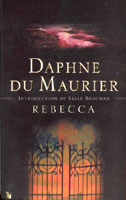
Rebecca

Rebecca
-by Daphne du Maurier

416 pages (2001) Harper Paperbacks
originally published in 1938
ISBN 978-0452284142

MY RATING: 4.5/5

modern-day Jane Eyre

The house at the centre of Daphne du Maurier's novel Rebecca, opens with the famous lines: “Last night I dreamt I went to Manderley again. It seemed to me I stood by the iron gate leading to the drive and for a while I could not enter, for the way was barred to me”. A fitting introduction to the spellbinding tale of intrigue, mystery and love.

At the outset of the novel Rebecca reflects on a dream she has had about Manderley estate, and as the story unfolds, she becomes the narrator of her story.

Simple, naive and young, Rebecca staying at a hotel with her employer, Mrs. Danvers, happens to meet the brooding handsome Maxim de Winter, a wealthy widower who is rumoured to have lost his first wife under mysterious circumstances. She ultimately becomes his second wife, and they moved to his estate at Manderley. As she settles into high society, she realizes how diffucult the adjustment is for her. Her relationship with Maxim becomes the object of rumours.

Mrs. Danvers, the mysterious and cruel housekeper.

The Shipping News

- by E. Annie Proulx

Awash with atmosphere and emotion

One can compare Proulx's rhythm of writing with that of the sea – mesmerizing! The Shipping News tells the story of a mediocre newspaper reporter in Mockingbird, NY, by the name of Quoyle (we don’t learn his first name). Lumbering, incurably withdrawn, and painfully self-conscious, he is described as having "a great damp loaf of a body" with "a giant's chin" that he constantly tries to hide with his hand.

Good-hearted but generally unsuccessful, Quoyle has always considered himself a failure. He is father to two young daughters, Bunny and Sunshine, and is completely devoted to his unfaithful and abusive wife, Petal Bear. Shortly after kidnapping and selling Bunny and Sunshine to sex traffickers, Petal and her lover are killed in a car accident. The two girls are located by police and returned safely to Quoyle. He feels his world collapsing around him.

When his paternal aunt (headstrong upholstering-entrepreneur, Agnis Hamm) convinces him that a fresh prospective would do both he and his two young daughters good, Quoyle decides to reclaim his life and goes back to his roots - Newfoundland; where his aunt, in search of a new life for herself, is headed. After moving into his family's ancestral home in Killick-Claw, he is hired on at a local newspaper, "The Gammy Bird", to report on the shipping news, the comings and goings at the local port.

Inevitably Quoyle settles into a small fishing village existence, where life is ruled (and sometimes, taken) by the sea. Where boats are a necessity and not recreation. As the tide ebbs and flows, troubling family secrets are uncovered. Despite his disturbing past, Quoyle gradually forms close bonds with those in the community and begins to gain the self-assurance and emotional strength he’s always lacked - allowing himself to love, and be loved, again.

Adding richness and atmosphere are the varying pieces - unusual characters - that make up the patch-work of small-town, Killick-Claw. Quoyle's newspaper coworkers... Jack Buggit, owner and editor of the newspaper, for whom fishing is both a calling and a curse. Old sea dog, 70-something, Billy Pretty – handles the home and local gossip column. Beaufield Nutbeem – animated English castaway on the Newfoundland shore who covers foreign correspondence and tracks down sexual abuse stories, is obsessed with his boat and plans of sailing across the Atlantic in it. Ever-enraged, Tert Card – "face like cottage cheese clawed with a fork" who describes himself as "the bloody so-called managing editor, copy editor, rewrite man, mechanicals, ad makeup department, mail and distribution chief, snow shoveler", harbours dreams of relocating to Florida. Then of course there’s the mad old hermit cousin who attempts to cast spells by tying a wide array of nautical knots. The former-truck driver who knits over his desk. The boat builder who hums the same folk tune under his breath. The tall quiet widow, Wavey Prowse, who ultimately changes Quoyle’s life.

Poignant, heart-rending, quirky, graceful, and often gut-splittingly funny, The Shipping News is a beautifully touching portrait of human emotion – a story of loss, pain, recovery and hope. Like most small village potboilers, it's a slow-moving yet vivid yarn that takes patience to immerse yourself in. But unlike the frigid and unforgiving Atlantic waters off the Grand Banks, it won't fail to warm your heart.
~
Penned prior to my review...
This book is on my 2011 reading list, and has sat on my shelf long enough. Glad I finally picked it up and read it. It's definitely one for my "favourites list". Started listening to this while in hospital, on audiobook. Narrated by Paul Hect who did an amazing job! This was so well-written (aside from a few expletives, which I felt were not necessary). Atmospheric and thoughtful. Really enjoyed this. Being from Nova Scotia, working in the newspaper industry, and knowing many Newfoundlanders helps too! ;) Hope to write a proper review of this soon.

Bird Songs

- by Les Beletsky, Jon L. Dunn  


A beautiful book, and a treasure to own and use.

I take it along with me whenever we go on our many camping trips throughout the year, to identify and 'attract' the many birds in the National Park we visit. Such a treat!

The descriptions about each bird and the lovely full-color drawings are a wonderful complement to the sounds of these amazing creatures. It is a favorite in my collection!

Historic Queens County

- by Tom Sheppard


A beautiful portrait of a way of life

Sheppard's Historic Queens County is a well-written book brimming with history and photos about a charming coastal county in the beautiful province of Nova Scotia, Canada.

While various communities are touched upon in the book, at the heart of Queens County is Liverpool, the hub of the Maritimes in the 19th century, offering a rich ship-building and shipping industry. Reading about my hometown's history was intriguing. The chapter dealing with daily life in Queens County is especially enjoyable.

As a life-long Queens County resident, this book is a charming reminder of my roots. Readers are treated to stories of days gone by and the history behind people and places that make Queens County what it is today.

This is highly recommended reading for history buffs, especially those interested in Canada's rich past.

No Name

- by Wilkie Collins

A virtually unknown masterpiece, and a new favourite from a picky reader

After the untimely death of their parents, the Vanstone sisters, Norah and Magdalen, face the stark reality of social stigma in Victorian England. Orphaned and penniless, they learn the devastating truth - they are illegitimate (children with "no name", hence the title of the book). And due to an anomaly in their father's will, the entirety of his wealth and estate is legally entailed away to their heartless uncle, who has no regard for their futures.

Vastly different in temperament, the elder sister, Norah calmly accepts her change in circumstance, resigned to accept work as a governess, while independent and scheming Magdalen refuses to accept the fate that their uncle has bestowed upon them and sets out on her own, vowing revenge.

To carry out her complex strategy of retribution, Magdalen enlists the assistance of the wily Captain Wragge, a distant relation and a self-confessed defrauder, who proves to be a comic relief with a tender humane heart at the core. Readers will be delighted to discover Wragge is just as memorable as many of Dickens' likable miscreants (not unlike Little Dorrit's Mr. Pancks).

Wragge and Magdalen face an uphill battle of wits, trying to outsmart the ruthlessly sharp Mrs. Lecount, the controlling and manipulative housekeeper of the will's beneficiary, Noel Vanstone. While Norah dutifully carries on with her life without incident, the intrepid Magdalen continues on with her quest for justice - at any expense - culminating in a surprise ending.

Perfectly plotted, though admittedly a tad bit slow at the outset, No Name is a treat for any classics lover and is well worth the time invested in its 700+ pages. Highly recommended!

Little Dorrit

-by Charles Dickens

1820's rags-to-riches tale, Dickens style

Where most books develop one puzzle piece at a time, Dickens' novels are comprised of large pieces that are gradually deconstructed into tiny individual parts, scattered with wild abandon, and then slowly reconstructed methodically until the final puzzle is complete. Little Dorrit is no exception to this Dickensian template.

A sardonic social lampoon and a searing satire at bureaucracy’s expense, Little Dorrit serves as Dickens’ analysis of society at the time and yet still retains a quiet dignity and undercurrent of a more psychological application.

This Dickensian classic explores imprisonment of both the literal and symbolic genre. Broken into two separate books – “Poverty” and “Riches” – the novel explores life from two different sides of London’s dreaded Marshalsea debtor prison’s walls.

Upon Arthur Clennam’s return to England after several years abroad in China, he meets and develops a benevolent interest in Amy Dorrit, the quiet diminutive seamstress of his embittered mother. Born within the Marshalsea prison walls, “Little Dorrit” as she is affectionately dubbed, patiently cares for her aging father, William Dorrit - a gentleman of past grandeur, long incarcerated for a debt he cannot repay. As Clennam becomes further acquainted with the Dorrits, he realizes his own mother holds a long-held secret regarding the Clennam's connection with the Dorrit family. Arthur also recalls mysterious fragmentary utterances by his dying father, desperately begging him to ‘make things right’ with the Dorrit family, for reasons unspoken. In light of this, Clennam takes it upon himself to investigate further into the imprisoned family’s history. It’s not long before he discovers that the dark secrets of the past stretch far beyond the prison walls to affect the lives of many, including his own.

As with any Dickens’ novel, it wouldn’t seem complete without its typical array of capricious stereotypical characters, from the likes of the excitable snorting rent-collector Mr. Pancks; the cranky crooked manservant Mr. Flintwinch; to the taciturn Flora Finching; the bureaucratic Barnacles in the unscrupulous Circumlocution Office; and the blatantly villainous but charismatic Monsieur Rigaud (with no less than three French aliases), whose hooked nose ventures over his mustache every time he utters a sinister laugh – a frequent occurrence.

Still, Little Dorrit defies categorization. Simultaneously a tragedy, comedy, social commentary, satire and mystery, it is a puzzle that, when solved, resolves itself to be an allegory of love itself, and the emphasis of personal responsibility. The novel is also a testimony to that rarest strength of character which ultimately remains untainted by status and situation in life, whether it be riches or poverty. It is observable to anyone familiar with Dickens' biography that the book draws intimately on the author's own troubled childhood, when his own father was imprisoned for three months in the Marshalsea debtor’s prison.

Granted, without rapt concentration, readers will easily be lost in the exuberant sprawl of its 800+ pages, but will find that it is well worth the effort.

The Architect's Brother

The Architect's Brother
-by Robert Parkeharrison


My Rating: 5 / 5

As beautiful as it is poignant!

They say a picture is worth a thousand words...this book proves that proverb true, without a doubt. Parkeharrison's haunting photos tell a story all of their own. By far my most favorite coffee table book that takes my breath away every time I open its cover.

The Blue Castle

The Blue Castle
-by Lucy Maud Montgomery


My Rating: 5 / 5

Best remembered for her well-loved red-headed heroine, Anne of Green Gables, Lucy Maud Montgomery's understated more 'grown up' novel, The Blue Castle, deserves equal, if not a higher echelon of praise. An invigorating exercise in general satire, The Blue Castle's characterization borders on Dickens-like caricature as Montgomery introduces an array of amusing, egotistical and decidedly silly relatives of the heroine, Valancy Stirling.

Social and familial pressures have combined to deny the sensitive 29-year-old the simple joys of youth. An overbearing pious mother and dour hypocritical relatives, who attempt to elevate themselves to local aristocracy, deliberately snuff out any spark of happiness that could make its way into Valancy's life.

She secretly finds solace in her daydreams of her 'Blue Castle' - a fantasy world she retreats to, where she is adored and happy; and the nature books penned by John Foster, a popular (but mysteriously unknown) author who writes about the poetic beauty of Canada's wilderness. Little does she know her life is about to change, on the receipt of a letter from her doctor, and that her Blue Castle will soon be within reach.

As the heroine herself undergoes a complete metamorphosis due to major life-changing events, so the plot takes the reader around one exciting bend after another. It is a pure delight to read and is sure to become a fast favorite of any reader that delves beyond the tasteless cover and insipid synopsis on the back of the book. The Blue Castle is truly one of L.M. Montgomery's greatest works that you will want to share with others!

Listography Journal: Your Life in Lists

Listography Journal: Your Life in Lists
-by Lisa Nola & Nathaniel Russell


160 pages (Sept. 2007)
Chronicle Books, hardcover
ISBN-10: 0811859088
ISBN-13: 978-0811859080


MY RATING: 5/5

Paradise for the list enthusiast

Do you have a list for just about everything and anything? Ever had dreams of penning an autobiography? Listography Journal offers a fun alternative to the run-of-the-mill diary. Author Lisa Nola and illustrator Nathaniel Russell have teamed up to create a fun way of recording information about yourself – a veritable life in lists!

The tangible companion to the popular website, Listography.com, the book will get you well on your way to keeping track of life’s big (and little) facts about yourself. It makes a terrific gift, and is also great for time capsules. The journal boasts a sturdy cover and thick pages ready for your exciting facts and details.

If you are a lover of lists, an avid archiver, or chronic chronicler, you’ll love this quirky take on journaling. Not to mention, the original illustrations that accompany each list will have you in stitches!

— reviewed for Chronicle Books

Hieronymus Bosch

Hieronymus Bosch
- by Larry Silver

424 pages (2006) Abbeville Press, hardcover
ISBN: 978-0-7892-0901-6


the most fascinating nightmare you've ever had

"Hieronymus Bosch carefully explores the often-nightmarish mind of this ever-illusive artist. Enormously impressive in its scholarly detail." — Art Times, Jan/Feb 2007

"Every page proclaims high seriousness. This is the scholarly volume on the artist for our time." — Arizona Daily Star, January 29, 2007

Chinese Landscapes Made Easy

Chinese Landscapes Made Easy
-by Rebecca Yue


Publisher: Batsford Books (UK), 176 pages
ISBN 978-0-7134-9047-3


MY RATING: 5/5

beautifully illustrated comprehensive art course

Imagery of the tranquillity and poetry of nature has remained a compelling source of inspiration for artists throughout the millennia. In particular, Chinese landscape paintings, clearly depict nature as more than a mere facsimile of surroundings. Rather, they are abstract expressions of the heart and mind of the artist — they are images that tell stories, exemplifying the depth and beauty of their surrounding culture.

In Chinese Landscapes Made Easy, author and artist Rebecca Yue’s comprehensive and methodical instruction, not only brings a beautifully painted Chinese landscape easily within reach of a novice artist, but also affords a glimpse into the old world techniques and inspiration behind the art.

Along with clear instructions, requisite materials and equipment are outlined and listed, which include: six basic, yet essential, Chinese brushes; various types and weight of paper to facilitate differing painting methods; ink; and other indispensable accessories. These items coupled with a little time, effort and imagination will help the artist master the basics of creating a beautiful finished painting.

The artist is artfully guided through the steps by systematic instructions, and diagrams, in how to manoeuvre the brushes, angling the brush on the painting surface, along with crucial techniques such as the “press and lift” and “dots and long dots” methods, dry and wet loading, two-color loading, and various brush strokes. The effects achieved by each technique are clearly demonstrated with illustrations and descriptive text.

In the beautifully illustrated “Moods & Seasons” and “Landscape Features” chapters, Yue utilizes her own paintings as a guide to clearly demonstrate how to piece together the elements learned in previous chapters, to produce an inspiring and stunning final painting.

In short, Chinese Landscapes Made Easy encapsulates an entire comprehensive art course, which aids the budding artist through every step of creating beautiful Chinese landscapes, and even facilitates the needs of more intermediate/advanced-level artist, seeking to improve skills in achieving a more true-to-form Chinese technique — an art form, in its own right.

05/31/2007
—Reviewed for Batsford Books

The Decorated Journal

The Decorated Journal: Creating Beautifully Expressive Journal Pages
-by Gwen Diehn


Paperback: 128 pages
Publisher: Lark Books; New Ed edition (August 28, 2006)
ISBN-10: 1579909566 / ISBN-13: 978-1579909567


MY RATING: 5/5

comprehensive and enjoyable workshop in a book

The Decorated Journal attests that Gwen Diehn, not only competent at binding and embellishing beautiful books, also finds her niche in writing them. From the first page onward, it is evident that Diehn, who teaches journal-creation itself as an art form, takes great pride in sharing the details of her creative knowledge and experience, as much as she enjoys putting them to use.

In this inspiring companion to her previous book, The Decorated Page, Diehn effortlessly initiates and encourages the flow of creative juices with regards visual journaling (complementing descriptive text with visual art), beautifying and personalizing pages/covers, and basic book-binding as a form of artistic expression.

Brimming with instructional gems, each page — amply and colourfully illustrated with expressive images and beautiful examples of creative journal pages — builds gradually on the preceding pages, allowing the reader to progressively observe how the core pieces of the project fit together and visualize the finished product.

The Decorated Journal includes various uses of materials such as watercolour, pastels, coloured pencils, crayons, liquid acrylics, ink, and a vast array of techniques to get the most out of your materials. Also helpful are Diehn’s detailed and practical comparisons of various types/weight of paper, varieties of adhesives, and brushes. Other design suggestions include the use of cut-outs, copier transfers, gouache, collage, colour washes, stamping, etc., to enhance the beauty and interest of your journal. The author touches upon dry/wet processes, use of transparencies and drop shadows to add an interesting dimension to the journal’s pages.

One of the book’s highlights is the comprehensive section on creating an actual journal from scratch, using basic easy-to-find materials. Even the most hesitant of bookbinders will appreciate the chapter entitled “The Reluctant Bookbinder” which walks you through the fundamentals: an easy-to-complete 3-minute pamphlet, the 6-minute double pamphlet, the 30-minute multiple pamphlet journal, and ultimately, the beautiful yet functional 2-hour leather-bound journal. Diehn’s tips are also helpful in customizing an unimaginative store-bought blank book that could use a personal touch. Instructions also include altering book covers or using an old book cover to create a new blank book.

Diehn generously offers her readers a comprehensive workshop in a book, which will be sure to delight journal enthusiasts. Whether you are a novice or “journal veteran”, an occasional journal reader/writer or an avid daily archivist, The Decorated Journal will prove to be a valuable creative resource, overflowing with inspiration and imaginative ideas.

05/31/2007
— Reviewed for Sterling Publishing Co., NY

The True & Authentic History of Jenny Dorset

The True & Authentic History of Jenny Dorset
-by Philip Lee Williams

494 pages (2001) paperback, University of Georgia Press
ISBN 0-8203-2334-9


MY RATING: 5 /5 stars

Williams delivers a classic of our day!

Williams’ impressive loveable tale — The True and Authentic History of Jenny Dorset: Consisting of a Narrative by a Retainer, Mr. Henry Hawthorne, Along With the History of Two Households, That of Dorset and Smythe: A Novel — is a more enjoyable and descriptive read than its lengthy title. A refreshing medley of life in 18th century Charleston, it is seasoned copiously with charming wit, sprightly comedy, and intriguing memorable characters. A truly captivating read, this pleasing narrative is written with a sincere heartfelt timbre and comes alive with animated anecdotes that will evoke chuckling, and searing wit that will leave its mark.

As Jenny Dorset, the household’s beautiful but unruly daughter, develops into a resolute rebel against authority as the American Revolution advances, the account charts her maturation, along with the raucous goings-on of the Dorset and surrounding households.

Penned from the observant perspective of Henry Hawthorne, the Dorset’s discerning and subdued family man servant who cares for the family loyally throughout the years, the reader will undoubtedly find the rich storyline highly entertaining, and written in a gratifying dynamic manner. The dedicated retainer, Hawthorne, patiently abides by the Dorset family’s rather eccentric and unruly lifestyle, and writes about his experiences first-hand, in perceptive memoir-like style. Hawthorne, loosely reminiscent of Wilkie Collins’ Mr. Gabriel Betteredge, the Moonstone’s elderly garrulous manservant, will surely entertain with his clever maxims, razor-sharp observations, and proverbial quotes. Also noteworthy are the narrator’s observations of the turbulent ‘timescape’ of the pre-revolutionary period, as war loomed on the horizon. (Williams’ tireless research is palpably evident!)

Most remarkable is the method in which Williams characterizes each member of the families involved in the story’s captivating plot — from the oddball dueling plantation patriarchs, Mr. Dorset and Mr. Smythe, hell bent on out-doing one another; to Old Bob, eldest of the family’s service staff, in his comedic stages of senility; and the spirited and ostentatious Jenny Dorset herself. Insertions of correspondence between characters, candid glimpses into their lives, and even excerpts of sheet music penned by the fictional Mr. Dorset, brings this beloved story alive and lends a realistic feel to the personal accounts.

Indeed, Williams’ novel is a great story-tellers’ delight! The True & Authentic History of Jenny Dorset manifests very engaging humor with every flip of a page. A classic of our day, it will quickly ascend as one of your favorites. Highly recommended.

Buy at The True & Authentic History of Jenny Dorset Amazon.com

orginally reviewed 10/28/2000
re-reviewed 04/23/2007

- reviewed for University of Georgia Press

Jane Eyre

Jane Eyre
-by Charlotte Brontë


ISBN-10: 1593081170 / ISBN-13: 978-1593081171
594 Pages (2005) Barnes & Noble Classics


My Rating: 5 / 5

a timeless classic

Charlotte Brontë’s Jane Eyre, a well-loved contribution to British classic literature, not only conjures images of mysterious gothic edifices and windswept moors, but more importantly, traverses the immeasurable depths of human emotion and its relation to the rigid social structure of the 19th Century. An exceptional amalgamation of ardent sentiment, extraordinary yet accessible characters, mystifying somber ambiance, and intelligent prose, Jane Eyre, is every bit as enrapturing as it was upon its first publication in 1847 by Smith, Elder & Company of London.

Orphaned as an infant, spirited 10-year-old Jane Eyre is sent to live with her rich relatives at Gateshead. Her aunt, Mrs. Reed, who had formerly promised her husband on his deathbed to love and treat Jane as one of her own, outwardly treats her adoptive niece with contempt. Reed’s own children, torment and treat Jane with hostility, constantly reminding her that she is destitute and reliant, and at their family’s mercy. Ultimately finding the antagonistic treatment insupportable, Jane resolves to stand up for herself, ending in a physical altercation with her vindictive cousin, John. She held accountable for instigating the clash and is severely castigated by her Aunt Reed. At the suggestion of a kind-hearted physician, Mr. Lloyd, Jane is sent away to Lowood School, a charity institution for orphan girls, run by Mr. Brocklehurst, in the hopes that she can escape her unhappiness at Gateshead and attain a sensible education. Jane’s Aunt Reed seems happy to be rid of her troublesome “possessed” niece, and instigates the cruel and unyielding Brocklehurst to keep her “in line” – singling her out from her peers, for discipline and ridicule.

Despite continually being made the target of the mean-hearted minister’s ire, Jane makes two special friends – a teacher, Miss Temple, and fellow student Helen Burns, who is eventually overcome by the poor living conditions and a typhoid epidemic that sweeps through the school. Due to the growing public outcry of the terrible conditions at Lowood, the school gradually is improved. Jane excels in her studies and flourishes in the improved surroundings, attaining a respectable education and becoming a teacher at the school. At age 18 she decides to advertise. As a result of her self-sufficient resourcefulness, Jane obtains a post as a governess and tutor at Thornfield, a sprawling country estate. She is warmly welcomed by the estate’s the friendly housekeeper, Mrs. Fairfax. As the months pass, the estate owner’s ward, Adèle Varens — a 10-year-old French girl of dubious parentage — begins to excel under Jane’s watchful eye and tutelage.

Walking to Thornfield one misty evening, Jane quite literally stumbles upon, Mr. Edward Rochester returning home from a long absence — the owner of Thornfield and her employer — a rugged, brooding man in his late-thirties. Although often aloof and “changeable”, Rochester is gradually bewitched by this young “other worldly” governess, and the two steadily form an unlikely attachment. Thus begins the greatest romance in literature. As the astounding drama unfolds, Jane also discovers that Thornfield harbors a secret…one that will change her life forever.

Brontë’s acute consciousness and understanding of the complexity of human emotions lends an unrivaled splendor and depth to Jane Eyre. She artfully molds what is a fundamentally mournful account into a tale of hope and happiness, imbuing it with vibrant, albeit succinct, metaphors of man’s immense capacity for kindness, decency and love.

Buy Jane Eyre at Amazon.com


04/20/2007


- reviewed for Sterling Publishing Co., NY

The 6th Lamentation

The 6th Lamentation
-by William Brodrick


ISBN 978-0142004623
400 Pages (2004)


My Rating: 4.5 / 5

brilliant debut demonstrates storytelling at its best

The 6th Lamentation — Brodrick’s dazzling debut on the events leading up to, and following, the Nazi’s occupation of France during World War II, and the impact on those who lived through it — is a novel of immense ethical intricacy, startling enlightenments and turnarounds. An effectual combination of fact and fiction, the story melds the past and present, spanning three generations…concluding in place where modern day retribution and past atrocities converge.

When Father Anselm, a barrister turned monk, is called on by a suspected war criminal, Eduard Schwermann, to provide asylum, Larkwood Priory (at Papal request), risks public scandal and harbours the former Nazi throughout his ensuing trial. When Anselm discovers that the Church earlier granted Schwermann and a French associate sanctuary after the war, providing them safe passage from France to England and new assumed identities, he launches a private investigation to find out why. Meanwhile, French expatriate Agnes Aubret, struggling with a debilitating terminal illness, discloses to her granddaughter Lucy her past involvement in a secret assemblage in the French Resistance, called The Round Table – a group that intended to conceal Jewish children from the murderous Nazi regime. The group was ultimately exposed by an infamous SS officer: Edward Schwermann. As Anselm peers into Schwermann iniquitous dealings and Lucy explores her grandmother's painful past, they discover the two seemingly unconnected histories are entwined, and are both connected to a French collaborator by the name of Victor Brionne.

Through his meticulous plot formation and ethically multifarious depiction of primary and secondary characters, Brodrick proves a leader in contemporaneous historical regeneration, in this acutely suspenseful drama/thriller. While avoiding being overly detailed on the horrendous atrocities of the Holocaust, he maintains a balanced pace throughout the novel, and often takes a step back from the bigger picture, focusing on poignant details that are often missed in novels of this genre.

Not unlike Shakespeare's tragic protagonists, whom are capable of both good and evil, Brodrick’s complex characters are anything but static, as they explore the possibilities of complex human nature — and how, ultimately, a single good work can often be used to justify countless crimes against humanity.

While disparaged by some for being too loquacious, The 6th Lamentation is not a book to be hurriedly perused. Brodrick, unlike many of today’s contemporary authors, makes a substantial ‘meal’ of the English language, which deserves to be savored and relished. Its eloquent literary verbosity and prose is effectively counterbalance by the story’s harrowing plot and white-knuckle twists and turns of plot, which will assuredly keep the reader on tenterhooks until it’s final pages.

The author’s own intriguing life experience as a practicing lawyer, and former monk, in addition to excerpts of his family history, add a rich density that elevates this story to more than just another good novel on the bookshelf. The 6th Lamentation is highly recommended for those who yearn for a historical drama and mystery, with a well-written literary aptitude.

Buy The 6th Lamentation at Amazon.com.


04/18/2007
- reviewed for Curled Up With A Good Book

Art of Still Life Drawing

Art of Still Life Drawing

160 pages (March 2006), paperback
Sterling Publishing Co., NY
ISBN: 978-1402732843


MY RATING: 5 / 5

Next best thing to a personal instructor

Whether you are a budding artist on the cusp of exploring drawing for the first time, or at a more advanced level and looking to embellish your proficiency, Art of Still Life Drawing makes accurate still life drawings uncomplicated and approachable for every level of sketcher. The book’s clear, precise step-by-step illustrations and explanations demonstrate the logic behind drawing, and thoroughly examine the fundamentals of attaining an amazingly vibrant and expressive composition. The building blocks of creating an accurate and successful still life, presented in coherent progression, will make even the most unskilled artist feel comfortable with delving into a more complex piece of art, and launch the emerging artists off on a great journey of creating something they’ve never attempted before.

Chapters include well-written and easy to follow instructions on the initial basic line drawing, perspective, incorporating light and shadow depending on the shape of the object; discussion of shapes, qualities and subjects of still life; amazingly informative instructions on rending the texture of an object (glass, metal, pottery, textiles, etc.); demonstration of creating accurate reflections and representing transparency; exploring the composition of the still life; and step-by-step studies of drawings from beginning to end, using different techniques and drawing implements.

Each comprehensive section of this lovely book is color coded for quick and easy reference at your fingertips, and a comprehensive index is also included at the back of the book for specific topic look-up. The reader will enjoy the sequential how-to’s in each chapter, with beautifully informative illustrations and understandable descriptive text, which offer helpful hints and different perspectives to each technique explored. Different drawing equipment and tools are discussed in achieving distinctive looks and renderings. The book also leaves room for coupling its instructions with the utilization of one’s own individual style, techniques and ideas, aiding in the creation of a still life that is anything but dull.

As a self-taught artist who is constantly endeavoring to better her drawing and painting skills, I can honestly recommend Art of Still Life Drawing as one of the better-end instructional drawing books available. It is the next best thing to having a real-life instructor by your side, guiding you through every step. With endless possible variations, Still Life Drawing offers artists, of any echelon, the ideal instruction for creating - and perfecting - still life compositions. Its inspirational lessons cover all the crucial precursors for capturing a realistic image, and is a must-have for any artist.

Buy Art of Still Life Drawing at Amazon.com


04/15/2007


- reviewed for Sterling Publishing Co., NY

Eating Up Italy

Eating Up Italy: Voyages on a Vespa
-by Matthew Fort


296 pages (autumn 2006)

MY RATING: 4.5/5

Bella! Bella!

Matthew Fort’s infatuation for all things edible and Italian are wonderfully palpable in this gastronomic treasure. Heady and sumptuous as a fine red wine, Eating Up Italy: Voyages on a Vespa — part travel memoir, part specialty recipe book — recounts Fort’s journeys all over the stunning Italian countryside, while lavishly showcasing each region’s own unique culinary “nuances”.

Italy’s romance and mystique lay in its beautiful language, hearty people, culture, fascinating history...and, of course, its wide array of mouth-watering edible delights. One would be hard-pressed to find a better qualified author for the task. Fort, one of Britain’s most renowned food critic and writer, formed an enthusiasm for Italy at the tender age of 11. The love affair with the country and its cuisine has only deepened with time, as Fort, at age 50, takes a “gastronomic tour” of the beautiful country from its southernmost tip at Melito Di Porto Salvo to the northern region of Turin.

Fort brings the tastes, aromas, and regional culture of Italy directly to the reader, in stunning clarity, coupled with a signature wit. Eating Up Italy is a bonafide travelogue on its own merits — nonetheless, Fort doesn’t rest on his laurels, expecting us to take his word for it. The tried-and-true age old recipes, generously peppered throughout, involve the reader and add an inimitable richness to Fort’s personal experiences, on his travels.

From regional delicacies to every-day local cuisine, Fort’s selected recipes and instructions, layered amidst engaging anecdotes teaming with insight into the lives and food of the locals, are easy to follow and tempting to try. Fortunately, many of the recipes are ‘formalized’, using easily recognizable standard measurements, as many Italian cooking techniques are known to use vague measurements such as “a little bit of this, a little bit of that.“ Some recipes may be easier than others, as some call for ingredients that would be challenging for a typical North American ‘foodie’ to find at their local market.

The book, itself, is bound beautifully with a ‘foodified’ rendition of Venus di Milo. Its lovely thick buttery paper and dark brown ink, lends itself an “old world” feel. At the back of the book is a comprehensive index, in case a particular recipe or notation requires reference on a whim.

Truly a voyager’s enchantment and a food lover’s bible, Eating Up Italy captures the incredible country that has it all, and will have any food lover or travel enthusiast shouting “Bella! Bella!”

One can only wait with bated breath - and grumbling stomach - for Fort’s upcoming labour of love, Eating Up Sicily.

Buy Eating Up Italy: Voyages on a Vespa at Amazon.com.


04/10/2007


- reviewed for Book Pleasures

The Annotated Pride and Prejudice

The Annotated Pride and Prejudice
-by Jane Austen (annotated & edited by David M. Shapard)

740 pages (2004)

MY RATING: 4.5/5

a more focused glimpse into Austen’s world


The Annotated Pride and Prejudice, indefatigably researched by David Shapard, contains intriguing particulars ranging from regency-period events, economy, society and customs of the time, to facts about Jane Austen’s family life and personal history, as they apply – verse by verse, paragraph by paragraph – to her most beloved of novels, Pride and Prejudice.

Not only a lovely bound volume of Austen’s masterpiece, Shapard’s meticulous work is also a uniquely comprehensive reference tool, or glossary, for the analytical prowess of the Regency-period zealot. Even more enjoyable are the literary commentaries, and “enlightenments” of certain ambiguous passages and behaviour of Austen’s enduring characters.

Within its tirelessly investigated annotations, in simple easy-to-read terms, Shapard effectively explores the development of Austen’s novel, drawing from the historical context “behind the scenes”, that the Regency-period author drew from -- the society from which Austen lived, and the world that shaped her creative mind to produce such a well-loved story.

The striking detail and explanations, encompassed by ample definitions, maps, illustrations and how it all fits into the novel’s context, will add a full, rich dimension to one’s reading.

The Annotated Pride and Prejudice is a book every avid “Austenite” and Pride and Prejudice aficionado would not want to do without – it is a more focused glimpse into Austen’s world, which will offer immense delight to the book’s enthusiasts.

Buy The Annotated Pride and Prejudice at Amazon.com


04/02/2007
- reviewed for Curled Up With A Good Book