- by Ellen Feldman
There are very few women my age who have NOT read The Diary of Anne Frank; it is one of the few secular books that have had an impact on my life. The author, Ellen Feldman, draws from that harrowing true life story and offers us a glimpse of what may have happened if Peter - Anne's young love - would have survived the Nazi regime and continued to live his life, after immigrating to America.
The young Jewish boy, Peter van Pels (or van Daan as Anne renames him in her diary) was hidden in the "secret annex" along with the Frank family; he was never reported as dead or alive after the War. What IF Peter van Pels, the boy who loved Anne Frank, survived the Holocaust? Would he have remained trapped in a psychological annex for the rest of his life? That is the story Feldman weaves in this scenario of 'what ifs'. It is written from Peter's perspective as he struggles mentally with what he has been through, what he has survived, and things he will never be able to forget.
While it was not the narrative I was expecting (to be honest, I initially thought it was book about Peter and Anne while they were living in the annex), it was an interesting read and one of those stories that make you think.
Showing posts with label fiction. Show all posts
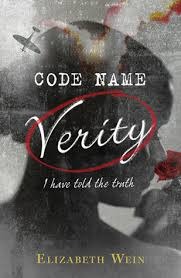
Code Name Verity
- by Elizabeth Wein
(epub)
This was a very unique book. At times, it was difficult to build a 'relationship' with the main character, due to the jumble of names and information presented in a disjointed style. It felt a bit too much like deciphering 'texting talk.' (Perhaps, because it is classified as a young-adult book? I'm not sure.) I also found it rather confusing when the main character wasn't overly clear regarding her identity, coupled with the often-times baffling stream-of-consciousness writing style and switch in narrators. All the pilot/flying talk was a bit dull and I'll be honest... I found myself skimming through a lot of it. However, the core premise of the plot was well put together and kept you reading.
The story, of course, was heartbreaking but interestingly written, with a lot of heart. When it all comes down to it and you peel everything else away, this is basically a story about 2 bosom friends who would - and DO - anything for the other.
(epub)
This was a very unique book. At times, it was difficult to build a 'relationship' with the main character, due to the jumble of names and information presented in a disjointed style. It felt a bit too much like deciphering 'texting talk.' (Perhaps, because it is classified as a young-adult book? I'm not sure.) I also found it rather confusing when the main character wasn't overly clear regarding her identity, coupled with the often-times baffling stream-of-consciousness writing style and switch in narrators. All the pilot/flying talk was a bit dull and I'll be honest... I found myself skimming through a lot of it. However, the core premise of the plot was well put together and kept you reading.
The story, of course, was heartbreaking but interestingly written, with a lot of heart. When it all comes down to it and you peel everything else away, this is basically a story about 2 bosom friends who would - and DO - anything for the other.
The Nightingale

-by Kristin Hannah
(epub)
It appears I am not the only one perplexed by the acclaim this book has received by countless reviewers. Granted, the novel is well-liked by those responding to something in the story that evidently touched them personally; however, I failed to have such an experience.
While the struggles and trials of the characters are weighty, the writing was such that it lent neither power, nor a moving quality to them. The characters themselves seemed two-dimensional and ultimately, failed to strike a chord.
While facts and events surrounding WWII were obviously quite well-researched, the tale itself was over-written and melodramatic, lacking in depth. The tepid, clichéd writing style was overly distracting and, at times, downright cheesy. The reader is all but told what to feel by the author, with copious adverbs and adjectives, which merely detracted from a plot that actually had a lot of potential. I'll be giving her other books a miss.
The Mummy Case
- by Elizabeth Peters
(Amelia Peabody #3)
It's not you, it's me.
Ok, I'll admit. I struggled to finish this one and was pretty eager to see it end. Though I've only had time and energy to read before bed lately, I was "okay" with putting The Mummy Case down far too quickly; picking it up again seemed to be a chore, not a delight.
The first novel, Crocodile on the Sandbank, was what lured me into the series in the first place. I enjoyed the witty repartee between Emerson and Peabody; I could relate to Peabody, and found Emerson totally entertaining. And the mystery aspect of Crocodile was attention-grabbing enough to keep me reading with interest. The second novel (The Curse of the Pharaohs) ...meh, not so much. And this third one, even less captivating than the second. Not that Peters isn't a good writer. Not that the characters aren't amusing (although, for me, I found the series started to lag once Ramses the Egyptologist wunderkind was introduced). Something was just... lacking.
I suppose it's the fact I don't really enjoy reading so much light-hearted banter and goings-on amidst a mystery. Perhaps it's the serious-toned, dreadful mysteries I prefer (a la Agatha Christie, Sherlock Holmes, Anne Perry). Perhaps light-hearted mysteries aren't my cup of tea?
Either way, it's not you, Elizabeth Peters – it's me…
Nevertheless, I am willing to read the next novel in the Amelia Peabody series, at some point in time, hoping that my stick-to-itiveness will be rewarded and my interest in the rest of the series will be rekindled.
(Amelia Peabody #3)
Ok, I'll admit. I struggled to finish this one and was pretty eager to see it end. Though I've only had time and energy to read before bed lately, I was "okay" with putting The Mummy Case down far too quickly; picking it up again seemed to be a chore, not a delight.
The first novel, Crocodile on the Sandbank, was what lured me into the series in the first place. I enjoyed the witty repartee between Emerson and Peabody; I could relate to Peabody, and found Emerson totally entertaining. And the mystery aspect of Crocodile was attention-grabbing enough to keep me reading with interest. The second novel (The Curse of the Pharaohs) ...meh, not so much. And this third one, even less captivating than the second. Not that Peters isn't a good writer. Not that the characters aren't amusing (although, for me, I found the series started to lag once Ramses the Egyptologist wunderkind was introduced). Something was just... lacking.
I suppose it's the fact I don't really enjoy reading so much light-hearted banter and goings-on amidst a mystery. Perhaps it's the serious-toned, dreadful mysteries I prefer (a la Agatha Christie, Sherlock Holmes, Anne Perry). Perhaps light-hearted mysteries aren't my cup of tea?
Either way, it's not you, Elizabeth Peters – it's me…
Nevertheless, I am willing to read the next novel in the Amelia Peabody series, at some point in time, hoping that my stick-to-itiveness will be rewarded and my interest in the rest of the series will be rekindled.
Labels:
2.5 stars,
Cozy Mystery,
fiction,
fluff,
mystery
The Face of a Stranger
-by Anne Perry
(William Monk, #1)
London. July 31, 1856. Enter, William Monk. At the outset of The Face of a Stranger, we know as much about Monk as he does: not much at all. A carriage accident has left him completely amnesic. Confused and dismayed at his current state, Monk gradually learns - through observation of his rooms, and carefully worded questions to others (without revealing his disadvantage) - that he is a police Inspector. Much to his chagrin, he comes to the realization that, while he is a brilliant detective, he is also callous, generally disliked, and infamously ambitious - willing to trample on others to advance his career. Others' reactions to Monk, paint a grim picture of his character - someone he does not even like, himself. While rather unlikely, it is fascinating to read the lead character's introspective thoughts and 'internal woolgatherings' as he comes to know the person he used to be, and is striving to change with every turn of the page.
Amidst all of this, Monk is sent back to work. He must piece himself together, while investigating a gruesome murder of a Crimean War hero, a member of the gentry. He ultimately succeeds in solving it with the help of his newly-assigned Sergeant, John Evans, who becomes his trusted friend, and Hester Latterly, a nurse who knew the murder victim in the Crimea.
I was impressed with how the story was constructed. While the investigation of the Grey mystery became cumbersome at times, overall the plot was very engrossing! Admittedly, I was a bit disappointed by who the culprit was, as I had suspected them early on, and hoped it was something a bit less predictable. However, the story was truly about Monk and his 'self-discovery' -- I enjoyed that aspect the most and it was really well done.
The Face of a Stranger was refreshingly different and a treat to read. What a clever way to involve the reader... by making the main character a mystery unto himself! I look forward to more in this series.
EDIT TO ADD (July 2013): I am current reading book number 11 of the Monk series. I am enjoying every single one!
(William Monk, #1)
London. July 31, 1856. Enter, William Monk. At the outset of The Face of a Stranger, we know as much about Monk as he does: not much at all. A carriage accident has left him completely amnesic. Confused and dismayed at his current state, Monk gradually learns - through observation of his rooms, and carefully worded questions to others (without revealing his disadvantage) - that he is a police Inspector. Much to his chagrin, he comes to the realization that, while he is a brilliant detective, he is also callous, generally disliked, and infamously ambitious - willing to trample on others to advance his career. Others' reactions to Monk, paint a grim picture of his character - someone he does not even like, himself. While rather unlikely, it is fascinating to read the lead character's introspective thoughts and 'internal woolgatherings' as he comes to know the person he used to be, and is striving to change with every turn of the page.
Amidst all of this, Monk is sent back to work. He must piece himself together, while investigating a gruesome murder of a Crimean War hero, a member of the gentry. He ultimately succeeds in solving it with the help of his newly-assigned Sergeant, John Evans, who becomes his trusted friend, and Hester Latterly, a nurse who knew the murder victim in the Crimea.
I was impressed with how the story was constructed. While the investigation of the Grey mystery became cumbersome at times, overall the plot was very engrossing! Admittedly, I was a bit disappointed by who the culprit was, as I had suspected them early on, and hoped it was something a bit less predictable. However, the story was truly about Monk and his 'self-discovery' -- I enjoyed that aspect the most and it was really well done.
The Face of a Stranger was refreshingly different and a treat to read. What a clever way to involve the reader... by making the main character a mystery unto himself! I look forward to more in this series.
EDIT TO ADD (July 2013): I am current reading book number 11 of the Monk series. I am enjoying every single one!
Labels:
4 stars,
british,
Cozy Mystery,
favourites,
fiction,
mystery,
series
Crocodile on the Sandbank
-by Elizabeth Peters
(Amelia Peabody #1)
What fun!
This enjoyable light read offers a playful romp through Egypt with a bit of mystery (albeit, predictable), romance, intrigue and humour thrown in for good measure. I'm looking forward to delving head-long into the rest of Peters' series - she writes with wit and a deft turn of phrase, but also bestows a certain amount depth to her characters.
Narrator and unlikely 'heroine', Amelia Peabody, is matter-of-fact, unflappable and very believable (I took to her in an instant); she resigned to the idea of becoming an 'old maid'. While in Rome, she rescues Evelyn, an English gentle-woman who has found herself on the losing end of a an imprudent relationship and in a compromising situation that jeopardizes her respectability. She soon becomes Peabody's companion and close friend, as the two head to Egypt to spend the winter months on the Nile - Peabody to escape the dullness of England's winter and Evelyn to escape a scandal. A chance encounter brings them into the acquaintance with the Emerson brothers, encamped at an ancient Egyptian archeological site. Strange occurrences begin to plague the dig, involving a run-about Mummy intent on frightening off the small party! New friendships are forged, and new enemies made, as the mystery at the archeological site begins to unravel.
Being the first of the series, this book "sets the scene", and is no doubt more of an introduction to the characters and their personas, as opposed to an elaborate storyline. (Emerson is quickly becoming a favourite!) It was certainly an enjoyable premiere!
Bring on the next!
(Amelia Peabody #1)
This enjoyable light read offers a playful romp through Egypt with a bit of mystery (albeit, predictable), romance, intrigue and humour thrown in for good measure. I'm looking forward to delving head-long into the rest of Peters' series - she writes with wit and a deft turn of phrase, but also bestows a certain amount depth to her characters.
Narrator and unlikely 'heroine', Amelia Peabody, is matter-of-fact, unflappable and very believable (I took to her in an instant); she resigned to the idea of becoming an 'old maid'. While in Rome, she rescues Evelyn, an English gentle-woman who has found herself on the losing end of a an imprudent relationship and in a compromising situation that jeopardizes her respectability. She soon becomes Peabody's companion and close friend, as the two head to Egypt to spend the winter months on the Nile - Peabody to escape the dullness of England's winter and Evelyn to escape a scandal. A chance encounter brings them into the acquaintance with the Emerson brothers, encamped at an ancient Egyptian archeological site. Strange occurrences begin to plague the dig, involving a run-about Mummy intent on frightening off the small party! New friendships are forged, and new enemies made, as the mystery at the archeological site begins to unravel.
Being the first of the series, this book "sets the scene", and is no doubt more of an introduction to the characters and their personas, as opposed to an elaborate storyline. (Emerson is quickly becoming a favourite!) It was certainly an enjoyable premiere!
Bring on the next!
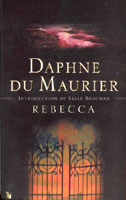
Rebecca
Rebecca
-by Daphne du Maurier
416 pages (2001) Harper Paperbacks
originally published in 1938
ISBN 978-0452284142
MY RATING: 4.5/5
modern-day Jane Eyre
The house at the centre of Daphne du Maurier's novel Rebecca, opens with the famous lines: “Last night I dreamt I went to Manderley again. It seemed to me I stood by the iron gate leading to the drive and for a while I could not enter, for the way was barred to me”. A fitting introduction to the spellbinding tale of intrigue, mystery and love.
At the outset of the novel Rebecca reflects on a dream she has had about Manderley estate, and as the story unfolds, she becomes the narrator of her story.
Simple, naive and young, Rebecca staying at a hotel with her employer, Mrs. Danvers, happens to meet the brooding handsome Maxim de Winter, a wealthy widower who is rumoured to have lost his first wife under mysterious circumstances. She ultimately becomes his second wife, and they moved to his estate at Manderley. As she settles into high society, she realizes how diffucult the adjustment is for her. Her relationship with Maxim becomes the object of rumours.
Mrs. Danvers, the mysterious and cruel housekeper.
-by Daphne du Maurier
416 pages (2001) Harper Paperbacks
originally published in 1938
ISBN 978-0452284142
MY RATING: 4.5/5
modern-day Jane Eyre
At the outset of the novel Rebecca reflects on a dream she has had about Manderley estate, and as the story unfolds, she becomes the narrator of her story.
Simple, naive and young, Rebecca staying at a hotel with her employer, Mrs. Danvers, happens to meet the brooding handsome Maxim de Winter, a wealthy widower who is rumoured to have lost his first wife under mysterious circumstances. She ultimately becomes his second wife, and they moved to his estate at Manderley. As she settles into high society, she realizes how diffucult the adjustment is for her. Her relationship with Maxim becomes the object of rumours.
Mrs. Danvers, the mysterious and cruel housekeper.
Labels:
4.5 stars,
classic,
Cozy Mystery,
favourites,
fiction,
mystery
Bird Songs
- by Les Beletsky, Jon L. Dunn
A beautiful book, and a treasure to own and use.
I take it along with me whenever we go on our many camping trips throughout the year, to identify and 'attract' the many birds in the National Park we visit. Such a treat!
The descriptions about each bird and the lovely full-color drawings are a wonderful complement to the sounds of these amazing creatures. It is a favorite in my collection!
Labels:
5 stars,
favourites,
fiction,
non-fic,
reference
The Guernsey Literary and Potato Peel Pie Society
-by Mary Ann Shaffer, Annie Barrows

Brimming with witticisms and a cast of lovable characters, this epistolary novel is an enjoyable read. One cannot fail to be charmed by the small island cast milling about Guernsey (a small island in the English Channel), who manage to endure the Nazi occupation with their own unique brand of pluck and pertinacity.
Juliet Ashton - a successful English journalist well known for writing a humorous column during the war years - sets out to pen a book now that the war is over. Suffering writers block for a subject, she fortuitously stumbles upon the Guernsey Literary and Potato Peel Pie Society - a band of islanders who form an intimate literary club, originally established on the fly as an excuse to conceal contraband food from the occupying soldiers.
Once the society’s members discover Juliet has focused on their club for her novel, it is not long before they start coming out of the woodwork. Sending Juliet letter after letter, they relate their experiences of how their little society helped them cope with the occupation, rallying them together, and often times the amusing predicaments they often found themselves in. But it’s not all silly antics. The grim reality of war casts a shadow on their letters, and gives the reader a window into the lives of those affected by the Nazi occupation.
While the entire premise is enjoyable, and the wit admirable, something in the story fell a little flat. Most of the characters seemed more akin to caricatures, writing with seemingly the same intonation as each other. Still, if you enjoy a good ‘story book’ ending and fun characters, it’s a rollicking - if not fluffy - read.
Brimming with witticisms and a cast of lovable characters, this epistolary novel is an enjoyable read. One cannot fail to be charmed by the small island cast milling about Guernsey (a small island in the English Channel), who manage to endure the Nazi occupation with their own unique brand of pluck and pertinacity.
Juliet Ashton - a successful English journalist well known for writing a humorous column during the war years - sets out to pen a book now that the war is over. Suffering writers block for a subject, she fortuitously stumbles upon the Guernsey Literary and Potato Peel Pie Society - a band of islanders who form an intimate literary club, originally established on the fly as an excuse to conceal contraband food from the occupying soldiers.
Once the society’s members discover Juliet has focused on their club for her novel, it is not long before they start coming out of the woodwork. Sending Juliet letter after letter, they relate their experiences of how their little society helped them cope with the occupation, rallying them together, and often times the amusing predicaments they often found themselves in. But it’s not all silly antics. The grim reality of war casts a shadow on their letters, and gives the reader a window into the lives of those affected by the Nazi occupation.
While the entire premise is enjoyable, and the wit admirable, something in the story fell a little flat. Most of the characters seemed more akin to caricatures, writing with seemingly the same intonation as each other. Still, if you enjoy a good ‘story book’ ending and fun characters, it’s a rollicking - if not fluffy - read.
No Name
- by Wilkie Collins
A virtually unknown masterpiece, and a new favourite from a picky reader
After the untimely death of their parents, the Vanstone sisters, Norah and Magdalen, face the stark reality of social stigma in Victorian England. Orphaned and penniless, they learn the devastating truth - they are illegitimate (children with "no name", hence the title of the book). And due to an anomaly in their father's will, the entirety of his wealth and estate is legally entailed away to their heartless uncle, who has no regard for their futures.
Vastly different in temperament, the elder sister, Norah calmly accepts her change in circumstance, resigned to accept work as a governess, while independent and scheming Magdalen refuses to accept the fate that their uncle has bestowed upon them and sets out on her own, vowing revenge.
To carry out her complex strategy of retribution, Magdalen enlists the assistance of the wily Captain Wragge, a distant relation and a self-confessed defrauder, who proves to be a comic relief with a tender humane heart at the core. Readers will be delighted to discover Wragge is just as memorable as many of Dickens' likable miscreants (not unlike Little Dorrit's Mr. Pancks).
Wragge and Magdalen face an uphill battle of wits, trying to outsmart the ruthlessly sharp Mrs. Lecount, the controlling and manipulative housekeeper of the will's beneficiary, Noel Vanstone. While Norah dutifully carries on with her life without incident, the intrepid Magdalen continues on with her quest for justice - at any expense - culminating in a surprise ending.
Perfectly plotted, though admittedly a tad bit slow at the outset, No Name is a treat for any classics lover and is well worth the time invested in its 700+ pages. Highly recommended!
After the untimely death of their parents, the Vanstone sisters, Norah and Magdalen, face the stark reality of social stigma in Victorian England. Orphaned and penniless, they learn the devastating truth - they are illegitimate (children with "no name", hence the title of the book). And due to an anomaly in their father's will, the entirety of his wealth and estate is legally entailed away to their heartless uncle, who has no regard for their futures.
Vastly different in temperament, the elder sister, Norah calmly accepts her change in circumstance, resigned to accept work as a governess, while independent and scheming Magdalen refuses to accept the fate that their uncle has bestowed upon them and sets out on her own, vowing revenge.
To carry out her complex strategy of retribution, Magdalen enlists the assistance of the wily Captain Wragge, a distant relation and a self-confessed defrauder, who proves to be a comic relief with a tender humane heart at the core. Readers will be delighted to discover Wragge is just as memorable as many of Dickens' likable miscreants (not unlike Little Dorrit's Mr. Pancks).
Wragge and Magdalen face an uphill battle of wits, trying to outsmart the ruthlessly sharp Mrs. Lecount, the controlling and manipulative housekeeper of the will's beneficiary, Noel Vanstone. While Norah dutifully carries on with her life without incident, the intrepid Magdalen continues on with her quest for justice - at any expense - culminating in a surprise ending.
Perfectly plotted, though admittedly a tad bit slow at the outset, No Name is a treat for any classics lover and is well worth the time invested in its 700+ pages. Highly recommended!
Labels:
4.5 stars,
classic,
favourites,
fiction
The Convenient Marriage
- by Georgette Heyer

A fun "Georgian Romp" well worth reading!
Fun, well-written, and refreshingly comedic, I thoroughly enjoyed The Convenient Marriage. It was everything I hoped it would be and, while lacking in the deep-thinking department, it more than made up for it in wit and humor.
At the outset of the story we are introduced to the eldest Winwood daughter, Elizabeth - a beauty of of noble birth, yet virtually penniless. At the prodding of her well-intentioned mother, Elizabeth is about to turn her back on her true love, Captain Heron, and marry a complete stranger, the Earl of Rule, solely for his vast wealth. However...
Enter: Horatia ("Horry") Winwood, Elizabeth's younger rebellious sister. Though rather young and uncouth, as well as stuttering and stubborn, Horry decides to save her sister from a loveless match! After much scheming, and to her elder sister's relief, Horry eventually takes her her position as the Countess of Rule. The Earl accepts the swap, but not without 'enduring' the adventure and hair-brained antics that ensue, involving the Countess herself, Pelham (the Winwood's congenial gambling brother) and his drinking buddy.
The Convenient Marriage literally brims with witty dialogue and interesting back-and-forths, with well-drawn characters and a quickly moving, easy-to-follow plot. The ending, albeit predictable, will satisfy any romantic at heart.
This was my first Heyer experience - I was so charmed by it that I *know* it won't be my last. :)
A fun "Georgian Romp" well worth reading!
Fun, well-written, and refreshingly comedic, I thoroughly enjoyed The Convenient Marriage. It was everything I hoped it would be and, while lacking in the deep-thinking department, it more than made up for it in wit and humor.
At the outset of the story we are introduced to the eldest Winwood daughter, Elizabeth - a beauty of of noble birth, yet virtually penniless. At the prodding of her well-intentioned mother, Elizabeth is about to turn her back on her true love, Captain Heron, and marry a complete stranger, the Earl of Rule, solely for his vast wealth. However...
Enter: Horatia ("Horry") Winwood, Elizabeth's younger rebellious sister. Though rather young and uncouth, as well as stuttering and stubborn, Horry decides to save her sister from a loveless match! After much scheming, and to her elder sister's relief, Horry eventually takes her her position as the Countess of Rule. The Earl accepts the swap, but not without 'enduring' the adventure and hair-brained antics that ensue, involving the Countess herself, Pelham (the Winwood's congenial gambling brother) and his drinking buddy.
The Convenient Marriage literally brims with witty dialogue and interesting back-and-forths, with well-drawn characters and a quickly moving, easy-to-follow plot. The ending, albeit predictable, will satisfy any romantic at heart.
This was my first Heyer experience - I was so charmed by it that I *know* it won't be my last. :)
The Little Giant of Aberdeen County
- by Tiffany Baker
Meet Truly Plaice - the ‘little giant’ of a backwater town in Aberdeen
County. Born with a pituitary gland disorder, acromegaly, Truly grows
exponentially as the months and years pass; a far cry from her sister
Serena Jane’s delicate prettiness. "Growing up", quite rapidly in
Truly's case, adds to her misery as she endures ridicule and
misunderstanding at the hands of her peers and family members, and is
treated as little more than a carnival sideshow by community members.
Despite her illness, and the many heartaches she has to endure as a
result of it, she gradually makes her mark on the little community,
battling issues of morality, love and choice. Truly rises to the
occasion with a height of character to match her dimensions.
While an interesting concept, Little Giant is one of those books that could leave a reader indifferent when the last page is turned. While selections near the beginning of the book hold interest and are quite well-written (apart from a few minor inconsistencies in the story), the cast and storyline gradually lose their luster after only one third of the way through, almost appearing as though the author’s interest in them wanes as the stagnant plot trudges its way to its somewhat unmoving conclusion. The characters, who held such promise at the outset, ultimately fall flat and fail to affect; not even the unlikely heroine, Truly, can salvage the story.
Readers may also be frustrated by Baker’s wording, which oftentimes tends to be overly protracted with many unnecessarily padded descriptions, which do nothing to advance the story or develop the characters.
While this book has many winning aspects to it, they simply are not capable of tipping the scales. Unfortunately, not a particularly satisfying read.
While an interesting concept, Little Giant is one of those books that could leave a reader indifferent when the last page is turned. While selections near the beginning of the book hold interest and are quite well-written (apart from a few minor inconsistencies in the story), the cast and storyline gradually lose their luster after only one third of the way through, almost appearing as though the author’s interest in them wanes as the stagnant plot trudges its way to its somewhat unmoving conclusion. The characters, who held such promise at the outset, ultimately fall flat and fail to affect; not even the unlikely heroine, Truly, can salvage the story.
Readers may also be frustrated by Baker’s wording, which oftentimes tends to be overly protracted with many unnecessarily padded descriptions, which do nothing to advance the story or develop the characters.
While this book has many winning aspects to it, they simply are not capable of tipping the scales. Unfortunately, not a particularly satisfying read.
Little Dorrit
-by Charles Dickens
1820's rags-to-riches tale, Dickens style
Where most books develop one puzzle piece at a time, Dickens' novels are comprised of large pieces that are gradually deconstructed into tiny individual parts, scattered with wild abandon, and then slowly reconstructed methodically until the final puzzle is complete. Little Dorrit is no exception to this Dickensian template.
A sardonic social lampoon and a searing satire at bureaucracy’s expense, Little Dorrit serves as Dickens’ analysis of society at the time and yet still retains a quiet dignity and undercurrent of a more psychological application.
This Dickensian classic explores imprisonment of both the literal and symbolic genre. Broken into two separate books – “Poverty” and “Riches” – the novel explores life from two different sides of London’s dreaded Marshalsea debtor prison’s walls.
Upon Arthur Clennam’s return to England after several years abroad in China, he meets and develops a benevolent interest in Amy Dorrit, the quiet diminutive seamstress of his embittered mother. Born within the Marshalsea prison walls, “Little Dorrit” as she is affectionately dubbed, patiently cares for her aging father, William Dorrit - a gentleman of past grandeur, long incarcerated for a debt he cannot repay. As Clennam becomes further acquainted with the Dorrits, he realizes his own mother holds a long-held secret regarding the Clennam's connection with the Dorrit family. Arthur also recalls mysterious fragmentary utterances by his dying father, desperately begging him to ‘make things right’ with the Dorrit family, for reasons unspoken. In light of this, Clennam takes it upon himself to investigate further into the imprisoned family’s history. It’s not long before he discovers that the dark secrets of the past stretch far beyond the prison walls to affect the lives of many, including his own.
As with any Dickens’ novel, it wouldn’t seem complete without its typical array of capricious stereotypical characters, from the likes of the excitable snorting rent-collector Mr. Pancks; the cranky crooked manservant Mr. Flintwinch; to the taciturn Flora Finching; the bureaucratic Barnacles in the unscrupulous Circumlocution Office; and the blatantly villainous but charismatic Monsieur Rigaud (with no less than three French aliases), whose hooked nose ventures over his mustache every time he utters a sinister laugh – a frequent occurrence.
Still, Little Dorrit defies categorization. Simultaneously a tragedy, comedy, social commentary, satire and mystery, it is a puzzle that, when solved, resolves itself to be an allegory of love itself, and the emphasis of personal responsibility. The novel is also a testimony to that rarest strength of character which ultimately remains untainted by status and situation in life, whether it be riches or poverty. It is observable to anyone familiar with Dickens' biography that the book draws intimately on the author's own troubled childhood, when his own father was imprisoned for three months in the Marshalsea debtor’s prison.
Granted, without rapt concentration, readers will easily be lost in the exuberant sprawl of its 800+ pages, but will find that it is well worth the effort.
Where most books develop one puzzle piece at a time, Dickens' novels are comprised of large pieces that are gradually deconstructed into tiny individual parts, scattered with wild abandon, and then slowly reconstructed methodically until the final puzzle is complete. Little Dorrit is no exception to this Dickensian template.
A sardonic social lampoon and a searing satire at bureaucracy’s expense, Little Dorrit serves as Dickens’ analysis of society at the time and yet still retains a quiet dignity and undercurrent of a more psychological application.
This Dickensian classic explores imprisonment of both the literal and symbolic genre. Broken into two separate books – “Poverty” and “Riches” – the novel explores life from two different sides of London’s dreaded Marshalsea debtor prison’s walls.
Upon Arthur Clennam’s return to England after several years abroad in China, he meets and develops a benevolent interest in Amy Dorrit, the quiet diminutive seamstress of his embittered mother. Born within the Marshalsea prison walls, “Little Dorrit” as she is affectionately dubbed, patiently cares for her aging father, William Dorrit - a gentleman of past grandeur, long incarcerated for a debt he cannot repay. As Clennam becomes further acquainted with the Dorrits, he realizes his own mother holds a long-held secret regarding the Clennam's connection with the Dorrit family. Arthur also recalls mysterious fragmentary utterances by his dying father, desperately begging him to ‘make things right’ with the Dorrit family, for reasons unspoken. In light of this, Clennam takes it upon himself to investigate further into the imprisoned family’s history. It’s not long before he discovers that the dark secrets of the past stretch far beyond the prison walls to affect the lives of many, including his own.
As with any Dickens’ novel, it wouldn’t seem complete without its typical array of capricious stereotypical characters, from the likes of the excitable snorting rent-collector Mr. Pancks; the cranky crooked manservant Mr. Flintwinch; to the taciturn Flora Finching; the bureaucratic Barnacles in the unscrupulous Circumlocution Office; and the blatantly villainous but charismatic Monsieur Rigaud (with no less than three French aliases), whose hooked nose ventures over his mustache every time he utters a sinister laugh – a frequent occurrence.
Still, Little Dorrit defies categorization. Simultaneously a tragedy, comedy, social commentary, satire and mystery, it is a puzzle that, when solved, resolves itself to be an allegory of love itself, and the emphasis of personal responsibility. The novel is also a testimony to that rarest strength of character which ultimately remains untainted by status and situation in life, whether it be riches or poverty. It is observable to anyone familiar with Dickens' biography that the book draws intimately on the author's own troubled childhood, when his own father was imprisoned for three months in the Marshalsea debtor’s prison.
Granted, without rapt concentration, readers will easily be lost in the exuberant sprawl of its 800+ pages, but will find that it is well worth the effort.
Labels:
4.5 stars,
classic,
favourites,
fiction
The House at Riverton
-by Kate Morton
a pleasant middling read, but nothing more
In the winter years of her life, 98-year-old Grace looks back on her past. Bound by society's early 20th century conventions as a misbegotten child, 14-year-old Grace was sent to be a servant in the 'big house' at Riverton. Fast-forward to the year 1999 - the production of a film is in progress regarding a tragic death that occurred at the house. The elderly Grace is asked to recollect any snippets of memories that would add to the film's authenticity and thus she begins to recount her memoirs of the event surrounding that time period. She also records more forthright details for her grandson; a final task she sets before herself, prior to her death.
Footslogging at a snail-pace at the outset, any impatience will be appeased when the slow-developing plot gradually quickens, culminating in a somewhat predictable and "tied up neatly with a bow" conclusion. Worthy of note is Morton's obvious research that went into the book and her uncanny ability to evoke the past. The candid glimpse into the sub-hierarchy goings on "below stairs" in the realm of servants, butlers and maids was nothing fresh, but certainly intriguing.
The characters in The House at Riverton failed to resonate, save the elderly narrator, Grace, who was particularly well developed. Grace, alone, had a richness, a realness, that you truly were drawn to - not merely as a geriatric caricature but as a living breathing person that you could almost touch. The ultimate "revelation" about Grace's origins wasn't a surprise. The drawn-out painstaking way this truth was realized by the lead character was irritating and detracted from the rest of the story.
A book like this would suit someone looking for a light, but entertaining, weekend read. Think Remains of the Day and Upstairs, Downstairs, sans remarkableness. Enjoyable, interesting, yet insubstantial - nothing that which would warrant a repeat perusal.
a pleasant middling read, but nothing more
Footslogging at a snail-pace at the outset, any impatience will be appeased when the slow-developing plot gradually quickens, culminating in a somewhat predictable and "tied up neatly with a bow" conclusion. Worthy of note is Morton's obvious research that went into the book and her uncanny ability to evoke the past. The candid glimpse into the sub-hierarchy goings on "below stairs" in the realm of servants, butlers and maids was nothing fresh, but certainly intriguing.
The characters in The House at Riverton failed to resonate, save the elderly narrator, Grace, who was particularly well developed. Grace, alone, had a richness, a realness, that you truly were drawn to - not merely as a geriatric caricature but as a living breathing person that you could almost touch. The ultimate "revelation" about Grace's origins wasn't a surprise. The drawn-out painstaking way this truth was realized by the lead character was irritating and detracted from the rest of the story.
A book like this would suit someone looking for a light, but entertaining, weekend read. Think Remains of the Day and Upstairs, Downstairs, sans remarkableness. Enjoyable, interesting, yet insubstantial - nothing that which would warrant a repeat perusal.
The Blue Castle
The Blue Castle
-by Lucy Maud Montgomery
My Rating: 5 / 5
Best remembered for her well-loved red-headed heroine, Anne of Green Gables, Lucy Maud Montgomery's understated more 'grown up' novel, The Blue Castle, deserves equal, if not a higher echelon of praise. An invigorating exercise in general satire, The Blue Castle's characterization borders on Dickens-like caricature as Montgomery introduces an array of amusing, egotistical and decidedly silly relatives of the heroine, Valancy Stirling.
Social and familial pressures have combined to deny the sensitive 29-year-old the simple joys of youth. An overbearing pious mother and dour hypocritical relatives, who attempt to elevate themselves to local aristocracy, deliberately snuff out any spark of happiness that could make its way into Valancy's life.
She secretly finds solace in her daydreams of her 'Blue Castle' - a fantasy world she retreats to, where she is adored and happy; and the nature books penned by John Foster, a popular (but mysteriously unknown) author who writes about the poetic beauty of Canada's wilderness. Little does she know her life is about to change, on the receipt of a letter from her doctor, and that her Blue Castle will soon be within reach.
As the heroine herself undergoes a complete metamorphosis due to major life-changing events, so the plot takes the reader around one exciting bend after another. It is a pure delight to read and is sure to become a fast favorite of any reader that delves beyond the tasteless cover and insipid synopsis on the back of the book. The Blue Castle is truly one of L.M. Montgomery's greatest works that you will want to share with others!
-by Lucy Maud Montgomery
My Rating: 5 / 5
Social and familial pressures have combined to deny the sensitive 29-year-old the simple joys of youth. An overbearing pious mother and dour hypocritical relatives, who attempt to elevate themselves to local aristocracy, deliberately snuff out any spark of happiness that could make its way into Valancy's life.
She secretly finds solace in her daydreams of her 'Blue Castle' - a fantasy world she retreats to, where she is adored and happy; and the nature books penned by John Foster, a popular (but mysteriously unknown) author who writes about the poetic beauty of Canada's wilderness. Little does she know her life is about to change, on the receipt of a letter from her doctor, and that her Blue Castle will soon be within reach.
As the heroine herself undergoes a complete metamorphosis due to major life-changing events, so the plot takes the reader around one exciting bend after another. It is a pure delight to read and is sure to become a fast favorite of any reader that delves beyond the tasteless cover and insipid synopsis on the back of the book. The Blue Castle is truly one of L.M. Montgomery's greatest works that you will want to share with others!
Labels:
5 stars,
classic,
favourites,
fiction
Mrs. Dalloway
Mrs. Dalloway
-by Virginia Woolf
My Rating: 2 / 5
Who's afraid of Virginia Woolf? Me! Me!
Sure she's supposedly lyrical and "la-tee-da". And this book is supposedly haunting and important. And it no doubt has its place in literature ...er... somewhere. But quite honestly, I'd be more willing to watch paint dry than read it again.
The story details a entire day in the life of Clarissa Dalloway, in high society England, post WWI, as she hurries about London preparing for a inner party to be held later that evening. Complete with flashbacks, it is penned in the "stream of consciousness" narrative mode, that Woolf is well known for, which I must admit isn't my cup of tea generally. This is no doubt why Dalloway didn't appeal to me on so many levels.
It should be read with the approach of a long-winded prose-poem, instead of a novel, with no set plot - a book that goes nowhere. So if you enjoy that kind of a writing style, this will be one for you.
In any case, speaking only for myself, Mrs. Dalloway is one of the dullest books I have ever read.
-by Virginia Woolf
My Rating: 2 / 5
Sure she's supposedly lyrical and "la-tee-da". And this book is supposedly haunting and important. And it no doubt has its place in literature ...er... somewhere. But quite honestly, I'd be more willing to watch paint dry than read it again.
The story details a entire day in the life of Clarissa Dalloway, in high society England, post WWI, as she hurries about London preparing for a inner party to be held later that evening. Complete with flashbacks, it is penned in the "stream of consciousness" narrative mode, that Woolf is well known for, which I must admit isn't my cup of tea generally. This is no doubt why Dalloway didn't appeal to me on so many levels.
It should be read with the approach of a long-winded prose-poem, instead of a novel, with no set plot - a book that goes nowhere. So if you enjoy that kind of a writing style, this will be one for you.
In any case, speaking only for myself, Mrs. Dalloway is one of the dullest books I have ever read.
Labels:
2 stars,
fiction,
thumbs down
Swan Place
Swan Place
-by Augusta Trobaugh
304 pages (2004) Plume Publishing, paperback
ISBN 978-0452284142
MY RATING: 3.5/5
warm and delicate like a southern breeze
Trobaugh returns to her southern roots with Swan Place, a coming-of-age tale of familial hardships and triumphs, that unfolds in a sleepy little town in Georgia. Despite the cloud of sad events, Swan Place allows glimmers of hope and contentment to break through, at the characters develop and grow.
At the heart of the story is Dove, a sensitive 14-year-old who loves her mother dearly, and has a sense of responsibility beyond her years. Dove, along with two younger siblings, is raised by her fun-loving "honky-tonking" Mamma who works as a hairdresser at home, and her simple kind-hearted husband, a step-father to the children. Despite the struggles to make ends meet in the small town, the family are close-knit and happy, and manage to instil respect and a sense of duty in their young daughter.
The story unravels with wistful delicacy, as Dove must overcome seemingly insurmountable struggles in the formative years of her childhood — the heartbreak of watching her once vibrant mother wither away with a terminal illness; assuming the household duties and the role of 'mother' to her two younger siblings; and the remarriage of her step-father to Crystal, an inexperienced 17-year-old and former bar dancer, a child herself in many ways.
After yet another family tragedy, Crystal, Dove and the two babies are left to fend for themselves. Ridiculed at school, and fearful of losing her dear siblings, Dove comes to discover that writing offers solace, as she pens stories and experiences in her journals and notebooks.
When Doves dead-beat biological father returns, threatening to break apart the little family, the girls’ only choice is to go into hiding. They enlist the help of Dove’s Bible-thumping Aunt Bett and an interesting array of newfound friends, to assist in their escape. The girls ultimately find themselves in the keep of the gruff but loveable “Buzzard” – the housekeeper of an affluent estate, hidden away on the outskirts of town, known as Swan Place. Buzzard and her fellow devout black women’s Christian group keep the girls safe and help them to bear up under trials.
A common thread throughout most of Trobaugh's books, Swan Place attests to the strength of love, familial relationships, and spirituality and how, combined, they can be a formidable foe in opposition to hopelessness, poverty and racism. It is a simple yet touching – and sometimes saccharine – read that will not be easily forgotten.
-by Augusta Trobaugh
304 pages (2004) Plume Publishing, paperback
ISBN 978-0452284142
MY RATING: 3.5/5
Trobaugh returns to her southern roots with Swan Place, a coming-of-age tale of familial hardships and triumphs, that unfolds in a sleepy little town in Georgia. Despite the cloud of sad events, Swan Place allows glimmers of hope and contentment to break through, at the characters develop and grow.
At the heart of the story is Dove, a sensitive 14-year-old who loves her mother dearly, and has a sense of responsibility beyond her years. Dove, along with two younger siblings, is raised by her fun-loving "honky-tonking" Mamma who works as a hairdresser at home, and her simple kind-hearted husband, a step-father to the children. Despite the struggles to make ends meet in the small town, the family are close-knit and happy, and manage to instil respect and a sense of duty in their young daughter.
The story unravels with wistful delicacy, as Dove must overcome seemingly insurmountable struggles in the formative years of her childhood — the heartbreak of watching her once vibrant mother wither away with a terminal illness; assuming the household duties and the role of 'mother' to her two younger siblings; and the remarriage of her step-father to Crystal, an inexperienced 17-year-old and former bar dancer, a child herself in many ways.
After yet another family tragedy, Crystal, Dove and the two babies are left to fend for themselves. Ridiculed at school, and fearful of losing her dear siblings, Dove comes to discover that writing offers solace, as she pens stories and experiences in her journals and notebooks.
When Doves dead-beat biological father returns, threatening to break apart the little family, the girls’ only choice is to go into hiding. They enlist the help of Dove’s Bible-thumping Aunt Bett and an interesting array of newfound friends, to assist in their escape. The girls ultimately find themselves in the keep of the gruff but loveable “Buzzard” – the housekeeper of an affluent estate, hidden away on the outskirts of town, known as Swan Place. Buzzard and her fellow devout black women’s Christian group keep the girls safe and help them to bear up under trials.
A common thread throughout most of Trobaugh's books, Swan Place attests to the strength of love, familial relationships, and spirituality and how, combined, they can be a formidable foe in opposition to hopelessness, poverty and racism. It is a simple yet touching – and sometimes saccharine – read that will not be easily forgotten.
— reviewed for Curled Up With A Good Book
Labels:
3.5 stars,
commissioned review,
fiction
The Jade Peony
The Jade Peony
— by Wayson Choy
288 pages (2007)
Other Press, paperback
ISBN 0312155565
MY RATING: 4 / 5 stars
a poignant examination of Chinese immigrants’ struggle in Canada
Wayson Choy's beautifully written debut novel, The Jade Peony, is a poignant examination of the Chinese immigrant experience in Vancouver’s Chinatown before and during the Second World War, and its consequence on collective ideals, as well as the immigrants’ personal identities. It is a representation of a proud, dignified people struggling to regain autonomy from the constraints of history, intolerance, destitution, and cultural heritage.
True to memoir-like fashion, The Jade Peony consists of three individual manuscripts, written from different perspectives. Three siblings in the same household of Chinese immigrants, eking out a meager living in Vancouver’s Chinatown, combine their accounts in one volume, to compile a narrative of different acculturation effects within the family and the Chinese community itself. These three very different life experiences and vantage points, bestow an accurate sampling of a new generation desperate to adjust and assimilate the new world culture, often at the sacrifice of the “old ways”…much to their elders’ dismay.
Little sister Jook-Liang, who longs to be a performer like Shirley Temple, befriends family friend Wong Bak, a deformed elderly man from the old country. As the two of them form an unlikely friendship, Jook-Liang ambitiously dreams of escaping the unyielding old ways, while grappling with the old Chinese convention of elevating the life of a boy above that of a girl.
Second brother Jung-Sum, taken from a neglectful family in China, is sent to live with his new adoptive family in Vancouver’s Chinatown. Besieged by childhood trauma of what he had to endure at the hands of his biological parents, he ultimately feels a sense of belonging amongst his new family, and finds his niche in boxing.
Third Brother Sekky, often plagued with illness (and as a result, coddled by Poh-Poh), never quite comes to terms with the plethora of complex Chinese dialects he is forced to study. Overwhelmed, he often retreats into himself, inducing visions of Poh-Poh after she is gone, and filling the void with an obsession for war games. When a forbidden relationship flourishes between Sekky’s Chinese babysitter and a Japanese boy, the lines between friend and foe are blurred by fear of frightful events happening a world away, with devastating consequences.
At the heart of each account is Poh-Poh (respectfully known as the “Old One”, or Grandmother). the mainstay and matriarch of the family, who passes down vivid reminiscences of her life experiences to the children. Not unlike the jade peony, which she bestows to them as an inheritance, Poh-Poh also confers them a more valuable inheritance — their cultural heritage as a people, and the necessity and importance of holding on to a measure of “old way” attitude.
Though discrimination and poverty predominated the early immigrants’ experience, Choy tempers his story with a caustic wit and a gritty humor that brings a certain hope to the often-heartrending chronicle. Given its candor and lucid voice on an important topic, it is no surprise that The Jade Peony has gained many accolades and awards, and has won its way to many readers’ hearts.
— by Wayson Choy
288 pages (2007)
Other Press, paperback
ISBN 0312155565
MY RATING: 4 / 5 stars
Wayson Choy's beautifully written debut novel, The Jade Peony, is a poignant examination of the Chinese immigrant experience in Vancouver’s Chinatown before and during the Second World War, and its consequence on collective ideals, as well as the immigrants’ personal identities. It is a representation of a proud, dignified people struggling to regain autonomy from the constraints of history, intolerance, destitution, and cultural heritage.
True to memoir-like fashion, The Jade Peony consists of three individual manuscripts, written from different perspectives. Three siblings in the same household of Chinese immigrants, eking out a meager living in Vancouver’s Chinatown, combine their accounts in one volume, to compile a narrative of different acculturation effects within the family and the Chinese community itself. These three very different life experiences and vantage points, bestow an accurate sampling of a new generation desperate to adjust and assimilate the new world culture, often at the sacrifice of the “old ways”…much to their elders’ dismay.
Little sister Jook-Liang, who longs to be a performer like Shirley Temple, befriends family friend Wong Bak, a deformed elderly man from the old country. As the two of them form an unlikely friendship, Jook-Liang ambitiously dreams of escaping the unyielding old ways, while grappling with the old Chinese convention of elevating the life of a boy above that of a girl.
Second brother Jung-Sum, taken from a neglectful family in China, is sent to live with his new adoptive family in Vancouver’s Chinatown. Besieged by childhood trauma of what he had to endure at the hands of his biological parents, he ultimately feels a sense of belonging amongst his new family, and finds his niche in boxing.
Third Brother Sekky, often plagued with illness (and as a result, coddled by Poh-Poh), never quite comes to terms with the plethora of complex Chinese dialects he is forced to study. Overwhelmed, he often retreats into himself, inducing visions of Poh-Poh after she is gone, and filling the void with an obsession for war games. When a forbidden relationship flourishes between Sekky’s Chinese babysitter and a Japanese boy, the lines between friend and foe are blurred by fear of frightful events happening a world away, with devastating consequences.
At the heart of each account is Poh-Poh (respectfully known as the “Old One”, or Grandmother). the mainstay and matriarch of the family, who passes down vivid reminiscences of her life experiences to the children. Not unlike the jade peony, which she bestows to them as an inheritance, Poh-Poh also confers them a more valuable inheritance — their cultural heritage as a people, and the necessity and importance of holding on to a measure of “old way” attitude.
Though discrimination and poverty predominated the early immigrants’ experience, Choy tempers his story with a caustic wit and a gritty humor that brings a certain hope to the often-heartrending chronicle. Given its candor and lucid voice on an important topic, it is no surprise that The Jade Peony has gained many accolades and awards, and has won its way to many readers’ hearts.
Buy The Jade Peony at Amazon.com.
05/07/2007
- reviewed for Curled Up With A Good Book
Labels:
4 stars,
commissioned review,
fiction
Lock 14
Lock 14 (Inspector Maigret Mysteries)
-by Georges Simenon
160 pages, Penguin
ISBN-10: 0143037277 / ISBN-13: 978-0143037279
My Rating: 4/5 stars
Acclaimed author, Georges Simenon, once again weaves a capturing tale of mystery and suspense, with the astute Inspector Maigret at the wheel. A series numbering over 100 books, the Inspector Maigret series – after a long stint of unavailability – has, thankfully, been reintroduced by Penguin Books to readers hankering for good mysteries. With an intriguing plot and a cast of believable characters, Lock 14, set early on in the Maigret series), is a swift but gratifying read.
Brusquer and less loquacious than Agatha Christie’s Hercule Poirot, Inspector Maigret is all business as he takes on a new case that is sure to perplex even the most skilled of sleuths.
Set in France, in the region of a lock located on a busy section of canal, Lock 14, recounts the underhanded goings-on along these extensive waterways. With commercial barge interchange in the lock, coupled with high-class yachts and tourist boats, which were often gathered in close proximity, the result was an aquatic melding pot of working class and “upper crust” societies.
The varying degrees of society in the vicinity of Lock 14 have apparently collided, on a rainy April day, when two dockmen stumble upon the cadaver of elegantly-clad Mary Lampson while rummaging under the hay in a stable; 5 hours dead from apparent strangulation. Inspector Maigret is called to piece things together. First to be interviewed is the dead woman’s husband, Sir Walter Lampson, an Englishman and retired colonel of the Indian Army, whose pleasure craft is docked near Lock 14. The Inspectors sharp instincts are alerted when Lampson, along with fellow passengers of his yacht - who seem only bent on a life devoted to decadence - appear oddly aloof and indifferent to the murder. Ultimately shedding light on a heartrending occurrence of lost identity and lost love, Maigret gradually pieces together the stories of those involved, and how Mary Lampson and a second victim met their untimely end.
Regardless of the descriptive language outlining the characters, conspicuous is the lack of background on Inspector Maigret himself. Simenon leaves the reader guessing about the Inspectors persona, and the depths that lie beneath his somewhat gruff and abrupt exterior.
Despite their small size, Simenon's Inspector Maigret series of mystery books are highly satisfying and concentrated with page flipping “who-dunnit” suspense, keeping readers captured until the final pages. Lock 14, itself, saw publication in 1931 and yet remains accessible and a pleasure to read. These are excellent books that are small and easy to pack for a weekend getaway or outing, and can be easily enjoyed in a few brief sittings.
-by Georges Simenon
160 pages, Penguin
ISBN-10: 0143037277 / ISBN-13: 978-0143037279
My Rating: 4/5 stars
Brusquer and less loquacious than Agatha Christie’s Hercule Poirot, Inspector Maigret is all business as he takes on a new case that is sure to perplex even the most skilled of sleuths.
Set in France, in the region of a lock located on a busy section of canal, Lock 14, recounts the underhanded goings-on along these extensive waterways. With commercial barge interchange in the lock, coupled with high-class yachts and tourist boats, which were often gathered in close proximity, the result was an aquatic melding pot of working class and “upper crust” societies.
The varying degrees of society in the vicinity of Lock 14 have apparently collided, on a rainy April day, when two dockmen stumble upon the cadaver of elegantly-clad Mary Lampson while rummaging under the hay in a stable; 5 hours dead from apparent strangulation. Inspector Maigret is called to piece things together. First to be interviewed is the dead woman’s husband, Sir Walter Lampson, an Englishman and retired colonel of the Indian Army, whose pleasure craft is docked near Lock 14. The Inspectors sharp instincts are alerted when Lampson, along with fellow passengers of his yacht - who seem only bent on a life devoted to decadence - appear oddly aloof and indifferent to the murder. Ultimately shedding light on a heartrending occurrence of lost identity and lost love, Maigret gradually pieces together the stories of those involved, and how Mary Lampson and a second victim met their untimely end.
Regardless of the descriptive language outlining the characters, conspicuous is the lack of background on Inspector Maigret himself. Simenon leaves the reader guessing about the Inspectors persona, and the depths that lie beneath his somewhat gruff and abrupt exterior.
Despite their small size, Simenon's Inspector Maigret series of mystery books are highly satisfying and concentrated with page flipping “who-dunnit” suspense, keeping readers captured until the final pages. Lock 14, itself, saw publication in 1931 and yet remains accessible and a pleasure to read. These are excellent books that are small and easy to pack for a weekend getaway or outing, and can be easily enjoyed in a few brief sittings.
Buy Lock 14 at Amazon.
04/26/2007
- reviewed for Curled Up With A Good Book
Labels:
4 stars,
commissioned review,
fiction
The True & Authentic History of Jenny Dorset
-by Philip Lee Williams
494 pages (2001) paperback, University of Georgia Press
ISBN 0-8203-2334-9
MY RATING: 5 /5 stars
Williams delivers a classic of our day!
Williams’ impressive loveable tale — The True and Authentic History of Jenny Dorset: Consisting of a Narrative by a Retainer, Mr. Henry Hawthorne, Along With the History of Two Households, That of Dorset and Smythe: A Novel — is a more enjoyable and descriptive read than its lengthy title. A refreshing medley of life in 18th century Charleston, it is seasoned copiously with charming wit, sprightly comedy, and intriguing memorable characters. A truly captivating read, this pleasing narrative is written with a sincere heartfelt timbre and comes alive with animated anecdotes that will evoke chuckling, and searing wit that will leave its mark.
As Jenny Dorset, the household’s beautiful but unruly daughter, develops into a resolute rebel against authority as the American Revolution advances, the account charts her maturation, along with the raucous goings-on of the Dorset and surrounding households.
Penned from the observant perspective of Henry Hawthorne, the Dorset’s discerning and subdued family man servant who cares for the family loyally throughout the years, the reader will undoubtedly find the rich storyline highly entertaining, and written in a gratifying dynamic manner. The dedicated retainer, Hawthorne, patiently abides by the Dorset family’s rather eccentric and unruly lifestyle, and writes about his experiences first-hand, in perceptive memoir-like style. Hawthorne, loosely reminiscent of Wilkie Collins’ Mr. Gabriel Betteredge, the Moonstone’s elderly garrulous manservant, will surely entertain with his clever maxims, razor-sharp observations, and proverbial quotes. Also noteworthy are the narrator’s observations of the turbulent ‘timescape’ of the pre-revolutionary period, as war loomed on the horizon. (Williams’ tireless research is palpably evident!)
Most remarkable is the method in which Williams characterizes each member of the families involved in the story’s captivating plot — from the oddball dueling plantation patriarchs, Mr. Dorset and Mr. Smythe, hell bent on out-doing one another; to Old Bob, eldest of the family’s service staff, in his comedic stages of senility; and the spirited and ostentatious Jenny Dorset herself. Insertions of correspondence between characters, candid glimpses into their lives, and even excerpts of sheet music penned by the fictional Mr. Dorset, brings this beloved story alive and lends a realistic feel to the personal accounts.
Indeed, Williams’ novel is a great story-tellers’ delight! The True & Authentic History of Jenny Dorset manifests very engaging humor with every flip of a page. A classic of our day, it will quickly ascend as one of your favorites. Highly recommended.
Buy at The True & Authentic History of Jenny Dorset Amazon.com
-by Philip Lee Williams
494 pages (2001) paperback, University of Georgia Press
ISBN 0-8203-2334-9
MY RATING: 5 /5 stars
Williams’ impressive loveable tale — The True and Authentic History of Jenny Dorset: Consisting of a Narrative by a Retainer, Mr. Henry Hawthorne, Along With the History of Two Households, That of Dorset and Smythe: A Novel — is a more enjoyable and descriptive read than its lengthy title. A refreshing medley of life in 18th century Charleston, it is seasoned copiously with charming wit, sprightly comedy, and intriguing memorable characters. A truly captivating read, this pleasing narrative is written with a sincere heartfelt timbre and comes alive with animated anecdotes that will evoke chuckling, and searing wit that will leave its mark.
As Jenny Dorset, the household’s beautiful but unruly daughter, develops into a resolute rebel against authority as the American Revolution advances, the account charts her maturation, along with the raucous goings-on of the Dorset and surrounding households.
Penned from the observant perspective of Henry Hawthorne, the Dorset’s discerning and subdued family man servant who cares for the family loyally throughout the years, the reader will undoubtedly find the rich storyline highly entertaining, and written in a gratifying dynamic manner. The dedicated retainer, Hawthorne, patiently abides by the Dorset family’s rather eccentric and unruly lifestyle, and writes about his experiences first-hand, in perceptive memoir-like style. Hawthorne, loosely reminiscent of Wilkie Collins’ Mr. Gabriel Betteredge, the Moonstone’s elderly garrulous manservant, will surely entertain with his clever maxims, razor-sharp observations, and proverbial quotes. Also noteworthy are the narrator’s observations of the turbulent ‘timescape’ of the pre-revolutionary period, as war loomed on the horizon. (Williams’ tireless research is palpably evident!)
Most remarkable is the method in which Williams characterizes each member of the families involved in the story’s captivating plot — from the oddball dueling plantation patriarchs, Mr. Dorset and Mr. Smythe, hell bent on out-doing one another; to Old Bob, eldest of the family’s service staff, in his comedic stages of senility; and the spirited and ostentatious Jenny Dorset herself. Insertions of correspondence between characters, candid glimpses into their lives, and even excerpts of sheet music penned by the fictional Mr. Dorset, brings this beloved story alive and lends a realistic feel to the personal accounts.
Indeed, Williams’ novel is a great story-tellers’ delight! The True & Authentic History of Jenny Dorset manifests very engaging humor with every flip of a page. A classic of our day, it will quickly ascend as one of your favorites. Highly recommended.
Buy at The True & Authentic History of Jenny Dorset Amazon.com
orginally reviewed 10/28/2000
re-reviewed 04/23/2007
- reviewed for University of Georgia Press
Labels:
5 stars,
commissioned review,
favourites,
fiction
Subscribe to:
Posts (Atom)